

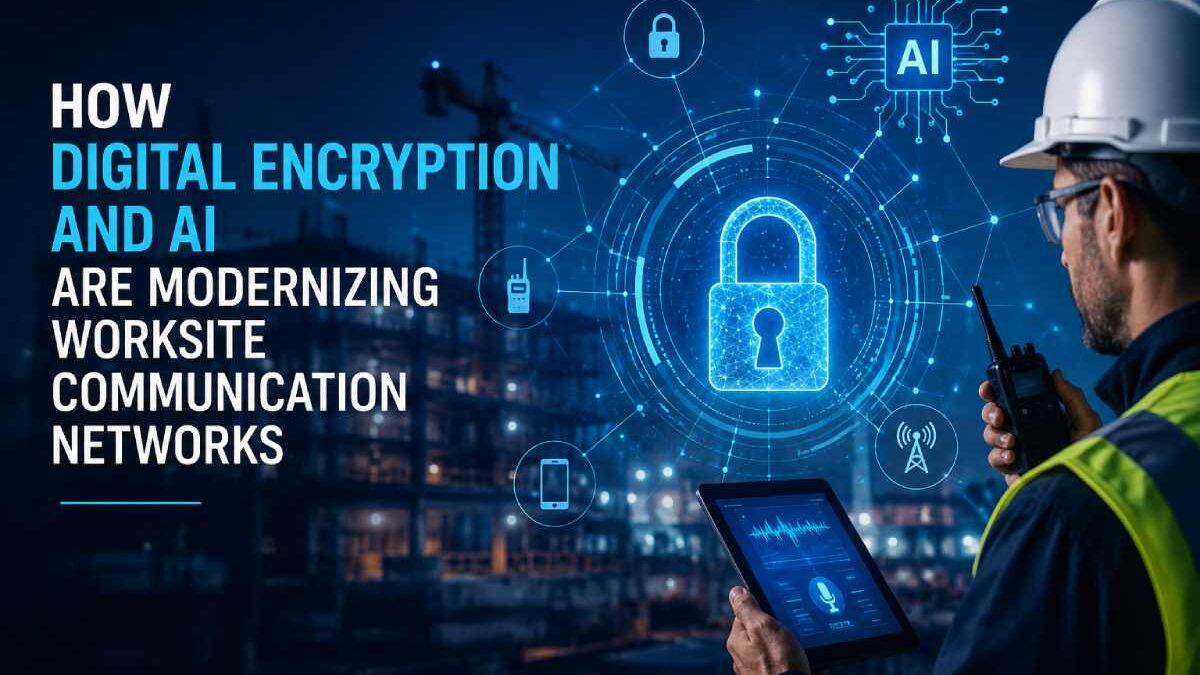
The digitisation of heavy industry has completely transformed how enterprise worksites operate. From automated logistics hubs to remote construction sites, data flows constantly between machines, sensors, and human operators. However, as operational technology becomes deeply integrated with corporate IT networks, cybersecurity has emerged as a top priority. While much attention is given to securing cloud infrastructure and software platforms, physical communication networks are often overlooked. Today, the integration of digital encryption and artificial intelligence is modernising worksite communication, closing a critical security gap that has long plagued enterprise environments.
The Hidden Risks in Legacy Communication
For decades, industries relied on analogue radio systems that broadcast unencrypted signals over open frequencies. These legacy networks were functional but completely exposed to eavesdropping and interception. In an era where corporate espionage and cyberattacks are rampant, transmitting sensitive operational data over unsecured channels is a major liability. Bad actors can easily intercept unencrypted voice traffic to gather intelligence on supply chain movements, shift changes, or physical security protocols.
The danger extends well beyond mere eavesdropping. According to the National Institute of Standards and Technology’s guidance on securing operational technology, legacy industrial protocols that lack basic authentication and integrity checks leave networks vulnerable to threat actors who can impersonate a device or modify messages in transit. This lack of authentication means an attacker could broadcast false instructions to a worksite, potentially halting production or creating severe safety hazards for the crew.
Upgrading Hardware for Advanced Encryption
To combat these vulnerabilities, enterprise procurement teams are shifting entirely to modern digital communication standards. Specifically, the market for digital two way radios Australia has expanded significantly to meet these stringent security demands. Contemporary digital systems utilise Advanced Encryption Standard algorithms to secure voice and data transmissions from end to end. This ensures that even if a signal is intercepted by an unauthorised party, the captured data appears as scrambled, unreadable noise without the correct cryptographic key.
These modern devices are no longer just basic voice transmitters. They function as sophisticated network endpoints equipped with military-grade encryption, ensuring that real-time operational data cannot be intercepted by bad actors monitoring local radio frequencies. By moving to encrypted digital hardware, site managers create a secure communication bubble that prevents unauthorised external access.
Aligning Field Tech with Corporate IT Policies
Securing worksite hardware requires the exact same rigour as securing a company laptop or a smartphone. Enterprise IT departments must treat all communication devices as potential access points to the broader corporate network. If an unencrypted communication device is lost or stolen, it could be used to secretly monitor ongoing operations, making physical device management a crucial component of overall enterprise cybersecurity.
Just as IT administrators implement stringent containerisation rules to protect sensitive corporate data on employee mobile devices, worksite hardware requires similar oversight. Modern communication fleets can now be managed via secure cloud-based dashboards. This allows IT teams to remotely wipe stolen units, update encryption keys over the air, and monitor network health in real time. Bridging the gap between corporate IT policies and physical worksite communications ensures a unified defence strategy against external threats.
How AI is Transforming Network Reliability
While robust encryption locks down the data, artificial intelligence is actively optimising how that data travels. The harsh environments of mining, construction, and manufacturing present unique challenges for clear communication. AI integration is solving these environmental problems while simultaneously boosting network security protocols.
The integration of AI into worksite communication networks offers several distinct advantages for enterprise users:
- Active Noise Cancellation: AI algorithms isolate human speech and instantly filter out background machinery noise, ensuring critical instructions are heard clearly the first time.
- Anomaly Detection: Machine learning models monitor network traffic for unusual usage patterns, instantly flagging potential unauthorised access attempts or mysteriously jammed frequencies.
- Automated Channel Switching: When AI detects interference or poor signal quality, it can automatically route users to a clearer, more secure frequency without requiring manual intervention from the operator.
- Predictive Maintenance: Smart systems track device battery health and signal degradation over time, alerting IT managers to replace failing units long before they cause an operational blackout.
As the digital landscape evolves, the line between physical worksite tools and enterprise IT infrastructure will continue to blur. Upgrading communication networks with robust encryption and intelligent software is no longer a luxury for modern businesses. By treating voice communication as highly sensitive corporate data and securing it accordingly, enterprises can protect their operational integrity from an increasingly sophisticated array of digital threats.


Using Nano Banana: When to Generate, Edit, or Remove a Background
Imagine preparing three images for a shop that sells desk lamps: a reading-corner illustration for its blog, a product photograph…

How to Keep Accurate Mileage Records With a Mileage Log App
Keeping accurate mileage records is an important part of managing business travel, vehicle expenses and tax documentation. Whether you are…