

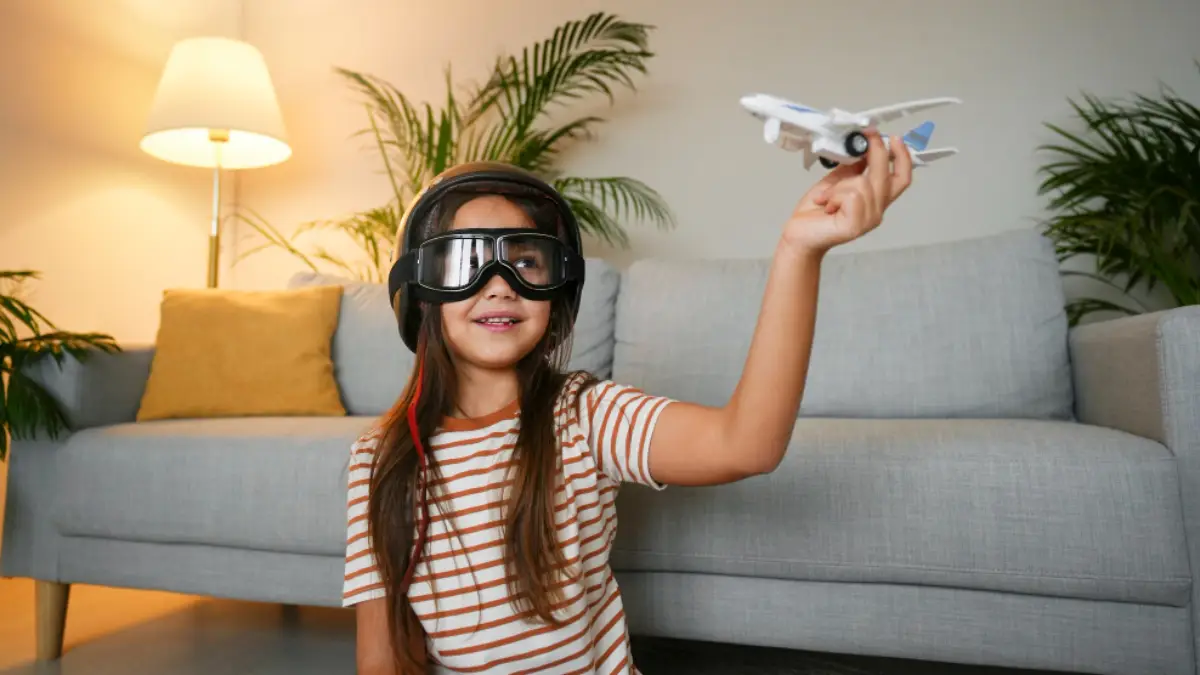
Technology is changing the way children learn, communicate, explore information, and understand the world around them. Digital resources, interactive tools, and age-appropriate learning platforms are becoming increasingly relevant to modern education. For parents looking for the best preschool in Airoli, understanding how a preschool approaches technology can therefore be an important part of evaluating its overall learning environment.
However, future-ready education is not about placing a screen in front of every child. Technology is most useful when it supports curiosity, creativity, communication, problem-solving, and meaningful interaction while remaining balanced with play, movement, and real-world experiences.
What Does Future-Ready Early Education Mean?
Future-ready education at the preschool level is about building a strong foundation for the years ahead. Young children are naturally curious, and their early experiences can shape how they approach learning as they grow.
Instead of expecting young learners to simply memorise information, modern early education can encourage them to ask questions, explore their surroundings, experiment with ideas, and express themselves.
Technology can support this process through interactive content, visual resources, educational activities, and age-appropriate digital experiences. However, these tools should complement hands-on learning rather than replace it.
1. Technology Can Make Learning More Interactive
Young children often respond well to visual and interactive experiences. Digital animations, stories, educational games, music, and interactive activities can introduce concepts in ways that capture their attention.
For example, a lesson about animals could combine storytelling with visual content, allowing children to identify different animals, sounds, habitats, and characteristics.
The important factor is purposeful use. Technology should help children understand or explore a concept rather than simply keep them occupied.
2. Digital Literacy Can Begin With Simple Experiences
Digital literacy does not have to mean teaching young children complicated technical skills.
At the preschool stage, it can begin with simple and guided experiences that help children understand how digital tools work. They can learn to follow instructions, interact with educational content, recognise basic digital symbols, and use technology appropriately.
As children grow older, these foundations can gradually develop into more advanced abilities such as researching information, creating digital projects, evaluating content, and communicating responsibly online.
Early education can therefore play a role in developing a healthy relationship with technology from the beginning.
3. Teachers Remain Essential
Technology can provide engaging learning resources, but it cannot replace the role of an educator.
Young children need encouragement, conversation, observation, reassurance, and individual attention. Teachers can recognise when a child is confused, encourage them to try again, and adapt an activity according to their needs.
This makes the teacher’s role particularly important in technology-supported education.
The strongest approach is often one where educators use digital resources as an additional teaching tool while continuing to focus on interaction, storytelling, discussion, play, and hands-on activities.
4. Experiential Learning Should Come First
Children learn through doing. Activities such as building, drawing, sorting, experimenting, role-playing, gardening, music, and outdoor exploration can help them understand concepts through direct experience.
Technology can complement these activities.
For example, children might watch a short age-appropriate video about plants before planting seeds themselves. The digital content introduces the concept, while the physical activity allows them to observe growth and understand the process directly.
This combination can make learning more memorable while developing observation, curiosity, and problem-solving skills.
5. Learning Should Not Become Screen-Dependent
One of the most important considerations in technology-enabled early education is balance.
Young children need movement, physical play, social interaction, creative expression, and time to explore their surroundings. Excessive dependence on digital content can take away from these important experiences.
Parents evaluating the best preschool in Airoli should therefore consider how technology fits into the wider learning experience.
A well-rounded environment should provide opportunities for children to interact with teachers and peers, participate in physical activities, explore creative interests, and learn through hands-on experiences alongside appropriate digital resources.
How Can Parents Evaluate a Preschool’s Technology Approach?
Parents do not need to be technology experts to understand whether a preschool is using digital tools meaningfully.
A few simple questions can help:
- Is technology being used for a clear educational purpose?
- Are digital activities appropriate for the child’s age?
- Is screen-based learning balanced with hands-on experiences?
- Do teachers remain actively involved during technology-supported activities?
- Are children encouraged to interact and communicate with others?
- Does the preschool provide opportunities for creativity, movement, and exploration?
- Is responsible technology use introduced in an age-appropriate manner?
The answers can help parents understand whether technology is being used as a learning tool or simply as an additional attraction.
Why Human Skills Matter Alongside Digital Skills
Technology will continue to change, which means children cannot be prepared for the future simply by learning how to use today’s devices or applications.
The skills that remain valuable across changing technologies include communication, creativity, curiosity, adaptability, collaboration, and problem-solving.
These abilities begin developing through everyday childhood experiences.
A child who learns to communicate an idea, work with another child, complete a small project, ask questions, or find a solution to a problem is already developing skills that can remain useful throughout their education.
This is why future-ready early education should focus on developing the whole learner rather than concentrating exclusively on technology.
What Should Parents Look For in Modern Early Education?
Parents comparing different schools in Airoli can look beyond digital infrastructure when evaluating an early-learning environment.
A preschool’s approach to technology is one factor, but parents can also consider the learning methodology, teacher involvement, classroom environment, opportunities for creative expression, outdoor activities, and the balance between structured and exploratory learning.
It can also be useful to understand how the preschool prepares children for the transition to formal schooling.
A strong early-learning environment should gradually help children develop independence, communication, confidence, curiosity, and the ability to participate in group activities.
Building a Balanced Learning Environment
The future of education will undoubtedly involve technology, but that does not mean traditional forms of learning will disappear.
Storytelling, drawing, physical play, experiments, conversations, books, music, and outdoor exploration remain valuable ways for children to learn. Technology can add another layer to these experiences when it is introduced thoughtfully.
The objective should be to help children become comfortable with technology while ensuring that they continue to learn through real-world experiences and human interaction.
This balanced approach can create a stronger foundation for future learning because children develop both digital familiarity and the interpersonal skills needed to use technology meaningfully.
Final Thoughts
Technology can make early education more interactive and provide children with new ways to explore ideas, but it should remain one part of a much larger learning experience. Parents exploring schools in Airoli can therefore look at how technology is balanced with teaching, play, creativity, physical activities, and opportunities for social development.
EuroSchool is one example of a school that incorporates technology-enabled learning within a broader educational approach. Its official website highlights digital learning alongside academics, co-curricular and extracurricular experiences, and its “Discover Yourself” philosophy. For parents, looking at how these different elements come together can be a useful way to understand what a future-ready learning environment can offer.
Also Read: Top Benefits of Deploying Web Hosting on Cryptocurrency Networks

How to Create Product Videos Without Filming Using Seedance 2.5 on Pollo AI
Creating product videos often requires planning a shoot, preparing equipment, and arranging suitable scenes. For many businesses, especially those that…
How Is Technology Shaping Future-Ready Early Education in Airoli?
Technology is changing the way children learn, communicate, explore information, and understand the world around them. Digital resources, interactive tools,…