

Heavy debris is part of daily work in industrial and commercial spaces. It shows up early in the shift and builds as the day goes on. Metal scraps drop near machines. Timber waste spreads through loading zones. Gravel moves in from yards and car parks. If this debris stays on the floor, it creates risk, slows movement, and reflects poorly on how the site is run.
As a facility manager or operator, you feel that pressure. You need floors that stay clean without pulling staff away from core work. You need a solution that handles weight, volume, and constant use. This is where a ride-on sweeper earns its place. Built for large areas and heavy waste, it gives you steady control over cleanliness, safety, and time.
What Heavy Debris Looks Like in Industrial and Commercial Sites?
Heavy debris is more than dust and light litter. In industrial spaces, it often includes solid, sharp, or bulky waste that standard cleaning tools cannot handle well.
Common examples include:
- Metal offcuts, swarf, and filings
• Timber chips and broken pallets
• Gravel, sand, and stones from yards and loading areas
• Plastic strapping, shrink wrap, and packaging waste
• Broken glass and dense cardboard
This debris builds up fast. It damages floors, blocks drains, and increases slip and trip risks. Manual sweeping takes time and exposes your team to strain and injury.
Why Manual Cleaning and Small Machines Fall Short?
Manual brooms and walk-behind machines struggle in large industrial spaces. They are slow and inconsistent. They also demand more physical effort from your staff.
Key limits include:
- Short cleaning paths that increase time on task
• Limited brush strength for dense debris
• Small collection bins that fill quickly
• Higher fatigue and manual handling risk
When debris is heavy and the floor area is large, these methods cost more in labour and downtime.
How is a Ride On Sweeper Designed for Heavy Debris?
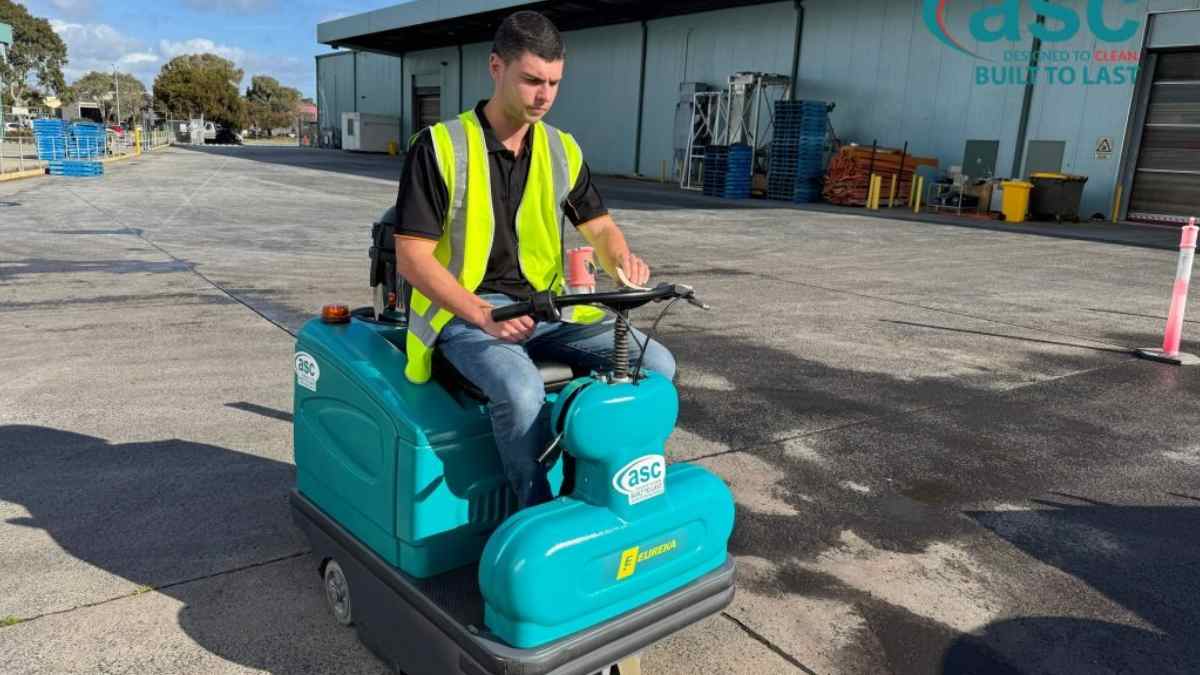
A ride-on sweeper is designed for strength, capacity, and control. You sit on the machine and cover wide areas in a single pass. The machine does the hard work, not your team.
Key design features include:
- Strong brush systems that move solid waste
• Large hoppers that hold heavy loads
• Stable frames for indoor and outdoor use
• Clear operator visibility for safe operation
These features let you clean faster while keeping standards consistent.
Brush Systems That Move and Lift Heavy Waste
#1 Main Cylindrical Brush
The main brush sits under the machine and rotates against the floor. Its stiff bristles loosen and lift heavy debris. The rotation pushes waste into the hopper rather than scattering it.
This matters when you deal with metal scraps or gravel. The brush applies steady pressure without damaging sealed concrete or industrial coatings.
#2 Side Brushes for Edges and Corners
Side brushes extend beyond the body of the machine. They pull debris away from walls, racks, and corners.
This helps you:
• Clean right up to edges
• Reduce build-up in hard-to-reach areas
• Avoid follow-up manual sweeping
Together, the brushes give you full coverage in one pass.
Hopper Capacity and Debris Containment
Heavy debris fills small bins fast. A ride-on sweeper uses a large hopper that holds more weight and volume. Benefits of a larger hopper include:
- Fewer stops to empty waste
• Less handling of sharp or heavy materials
• Faster cleaning cycles
Many hoppers are enclosed. This keeps debris contained and prevents dust from spreading back onto the floor.
Power, Traction, and Control on Rough Surfaces
Industrial floors are rarely smooth everywhere. You may have ramps, dock plates, or outdoor yards with uneven ground. Ride-on sweepers are built with:
- Strong drive systems for steady movement
• Good traction for slopes and rough surfaces
• Controlled speeds for safe operation
This control helps you clean loading bays, car parks, and external areas without losing grip or stability.
Dust Control When Handling Heavy Debris
Heavy debris often breaks down into fine dust. This dust affects air quality and settles back onto clean floors. Ride-on sweepers manage this with:
- Built-in filtration systems
• Dust suppression during sweeping
• Enclosed debris paths
This protects your staff and helps you meet workplace hygiene standards.
Safety Benefits for Your Team
When you reduce manual sweeping, you reduce risk. A ride-on machine supports safer work practices across your site. Key safety benefits include:
- Less bending, pushing, and lifting
• Reduced exposure to sharp debris
• Better visibility from the operator seat
• More predictable cleaning routines
Your team stays focused on supervision and quality checks rather than physical strain.
Closing Thoughts
Heavy debris is part of industrial work. You cannot avoid it, but you can control it. When you use a ride-on sweeper that matches your site, you clean faster, protect your team, and keep floors safe every day. The right equipment turns cleaning into a routine task rather than a constant problem.
Also Read: Understanding AEO: How SEO Has Evolved

6 Interface Problems That Are Quietly Costing Your Startup Growth
Your product interface is rarely just a design decision. For a tech startup, it’s the moment a potential user, investor,…

How Better Route Planners are Improving ETA Accuracy and Customer Experience
Modern supply chains dictate that an Estimated Time of Arrival (ETA) is no longer a flexible approximation but a strict…