

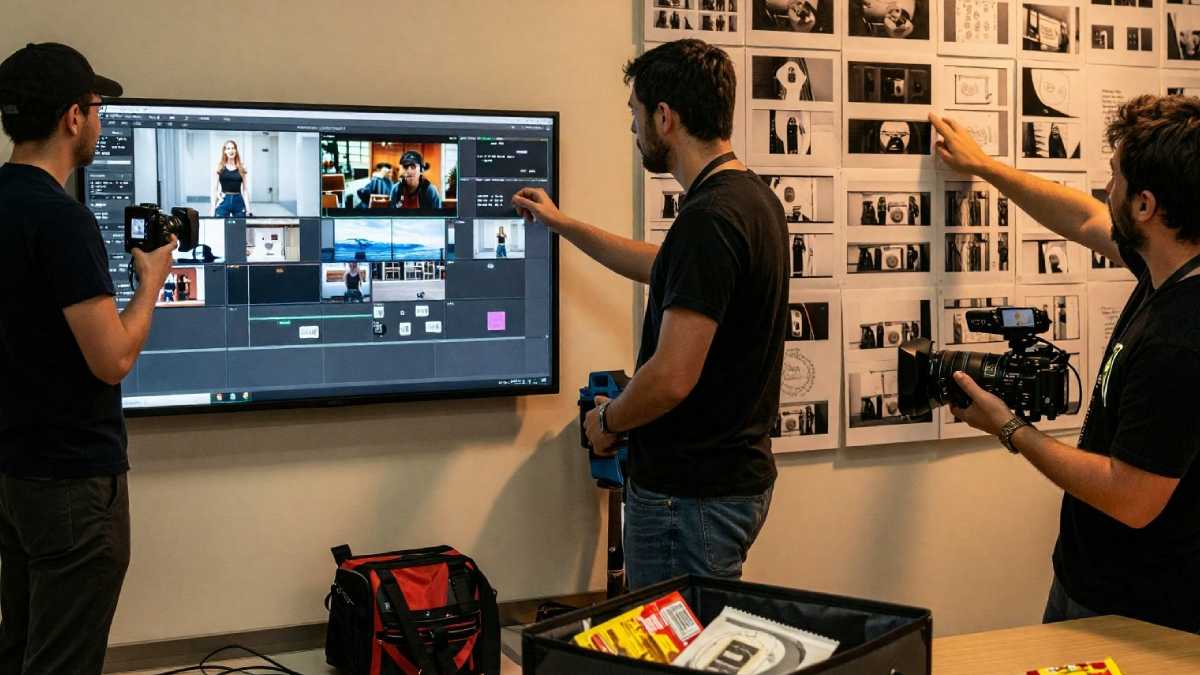
I’ve tested enough creative software to know that most “workflow breakthroughs” are exaggerated. The promise usually sounds bigger than the practical gain. Still, every now and then a category matures enough that the change becomes difficult to ignore. Recently, AI video creation tools have reached that point for me.
The shift is not that these tools can do everything. They can’t. The shift is that they now handle certain production tasks well enough to change how I plan content from the beginning. I notice it most in projects where speed matters, style matters, and the budget or timeline is too tight for traditional production to make sense.
That is especially true when I’m working with an AI video to animation converter workflow. In the past, turning ordinary footage into something stylized, platform-friendly, and visually distinctive often meant a long chain of editing, compositing, and experimentation. Now that process is much more accessible.
GoEnhance also provides a good AI video generator, and that kind of all-in-one usefulness is part of why AI video tools have become harder to dismiss in real production environments.
Why More Creators Are Rethinking the Traditional Pipeline
Traditional video production still matters. I am not one of those people who pretends one-click generation replaces careful planning, art direction, or editing judgment. But I am also not willing to ignore where the bottlenecks are.
Most small teams and independent creators run into the same constraints:
| Constraint | What it causes |
| Limited footage | Fewer creative options in the edit |
| Tight deadlines | Less room for experimentation |
| Small budgets | Inconsistent production quality |
| Platform pressure | Need for frequent, fast output |
AI tools matter because they reduce friction at exactly those pressure points. They give creators a way to test style, extend content possibilities, and repurpose raw material without having to rebuild everything from zero.
Why Video-to-Animation Feels Bigger Than a Visual Filter
When I first looked at these tools, I assumed the appeal was mostly aesthetic. A new style, a different look, maybe a fun effect for social media. That turned out to be too shallow a reading.
The better video-to-animation tools do something more important: they reframe mediocre footage into content with stronger identity.
That matters because not every clip fails for the same reason. Sometimes the motion is fine but the live-action look feels generic. Sometimes the subject is interesting but the footage lacks atmosphere. Animation conversion can shift the viewer’s expectations in a way that makes the material feel more intentional.
I have found it useful in:
- creator content that needs stronger visual identity
- branded social clips that should feel less ordinary
- repurposed footage that no longer looks fresh
- character-led content that benefits from stylization
The key is not to treat animation as camouflage. It works best when the transformation supports the original idea.
The Unexpected Rise of AI Dance Content
One category I underestimated at first was AI dance. I thought it would remain mostly novelty-driven, something that spikes in attention but does not hold much practical value. I was wrong.
In social content, movement is memory. Rhythm, pose, looping motion, and exaggerated expression can create a stronger recall effect than a static concept ever could. That is part of why a tool like the GoEnhance AI dance generator has found a place in creator and brand experimentation alike.
What surprised me was not the effect itself. It was how adaptable the format became. AI dance content can work for:
- playful brand campaigns
- fan content and character-based media
- seasonal or trend-driven social posts
- fast concept testing for visual hooks
Of course, quality still matters. Bad motion breaks immersion quickly. But when the rhythm feels coherent and the subject remains recognizable, the format has more staying power than I expected.
How My Workflow Has Actually Changed
The biggest change is not that I use AI for every project. I don’t. The real change is that I now make earlier decisions about what kind of content a piece wants to become.
Instead of asking only, “How do I edit this footage?” I now ask:
- Should this stay live action?
- Would stylization improve clarity or identity?
- Does this concept need motion that the original footage cannot provide?
- Would an AI-generated variation help me test faster?
That shift saves time. It also reduces the tendency to overwork raw footage that was never going to become strong through manual editing alone.
A simplified version of my current thinking looks like this:
| Content need | Tool direction |
| Better style identity | Video-to-animation |
| Faster social experimentation | AI dance / motion-led formats |
| Repurposing older material | Stylized conversion |
| Character-driven engagement | Motion-based AI formats |
Where These Tools Still Fall Short
I do not think it helps anyone to oversell this space. AI video tools are useful, but they still break in recognizable ways. Motion can become inconsistent. Subject stability can drift. Style can overpower readability. Some outputs look flashy in isolation and unusable inside a real campaign.
That is why selection matters more than generation. The tool is not the final taste-maker. The person using it still has to know what to keep, what to reject, and what to refine.
In my own work, the best results still come from combining AI speed with human restraint.
Final Thoughts
What changed my mind about AI video creation was not a single spectacular demo. It was repeated practical usefulness.
A clip that became usable instead of abandoned. A rough visual that found a stronger identity. A concept that got tested in hours instead of days. Those are the changes that add up.
So yes, AI video creation tools are transforming digital content production, but not because they replace creative work. They matter because they expand what a small team, a solo creator, or a fast-moving brand can realistically produce. From what I’ve seen in actual workflow use, that is a meaningful shift, not a passing gimmick.
Also Read: Learning Support That Leads to Better Employment Opportunities
AI Video Creation Tools Are Transforming How Digital Content Is Produced

AI Video Creation Tools Are Transforming How Digital Content Is Produced
I’ve tested enough creative software to know that most “workflow breakthroughs” are exaggerated. The promise usually sounds bigger than the…

Canopy Tents Buying Guide: Comparing Steel vs. Aluminum Frames for Long-Term Use
Promotional events and business fairs in outdoor settings, farmers’ markets, and even corporate trade shows rely heavily on durable canopy…