


In the current landscape of generative media, efficiency is frequently throttled by a phenomenon known as the “Identity Drift” tax. For creative operations leads, the cost isn’t just the subscription price of a GPU cluster; it is the hundreds of human hours lost to the manual curation of inconsistent outputs. When a character’s jawline shifts five degrees between frames or a costume’s fabric texture fluctuates in a 10-second sequence, the asset is discarded.
Relying on text prompts alone to maintain character persistence across diverse environments is a statistically losing game. At scale, the “prompt and pray” method results in a render discard rate that most commercial pipelines simply cannot afford. To solve this, teams are moving toward a reference-first architecture, treating specific models as “anchors” to lock in visual identity before a single frame of motion is rendered.
The High Cost of Identity Drift in Generative Media
Identity drift is the subtle, progressive loss of a subject’s defining characteristics as they move through different lighting, angles, or temporal sequences. In a professional production pipeline, inconsistency is more than an aesthetic flaw—it is a technical failure. If a creative team is building a multi-part ad campaign, the lead subject must be recognizable across static hero images, social shorts, and long-form video.
Most generative models are trained on vast, heterogeneous datasets, which makes them excellent at “averaging” a concept like “a middle-aged man in a suit” but poor at maintaining “the specific mole under the left eye of Marcus, the brand protagonist.” When teams push for variety—changing a character’s location from a sunlit park to a neon-lit office—generic models often prioritize the environmental lighting over the character’s structural integrity.
Creative operations leads need a “system of record” for visual assets. This means moving away from the ephemeral nature of a chat-box interface and toward a structured workflow where identity is parameterized and protected.
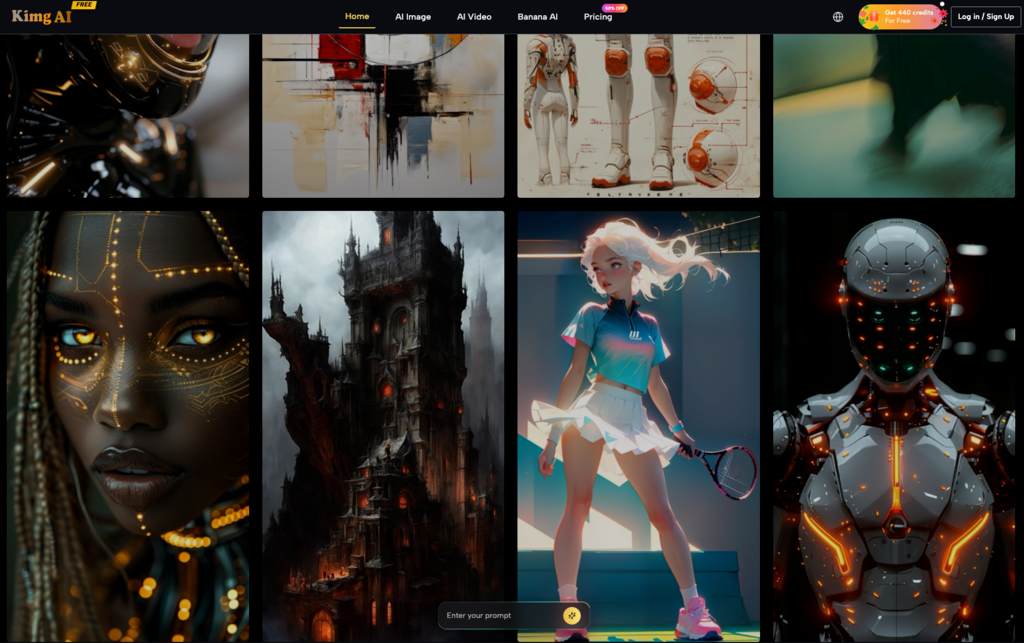
Kimg AI: Establishing the Visual Source of Truth
Achieving stability begins at the foundational image layer. In our benchmarking of various image-generation models, Nano Banana Pro has emerged as a high-utility anchor for identity grounding. Unlike many models that prioritize artistic flare over structural adherence, this model demonstrates a tighter grip on facial ratios and unique identifiers.
When we talk about a “source of truth,” we are referring to the creation of a 360-degree character sheet. This involves generating the subject in a neutral setting with high-fidelity detail. Nano Banana Pro allows for a level of granular control over descriptors—such as specific bone structure or unique hair patterns—that typically get lost in broader models.
Note of uncertainty: While this model provides superior structural seeds, it is important to acknowledge that the “seed” is not a magic bullet. Identifying exactly which combination of noise settings and prompt weights provides the absolute highest stability across lighting changes remains an iterative process, rather than a purely mathematical certainty.
By using this model as the starting point, teams can “lock” the character’s identity in a high-resolution environment before moving to more complex transformations. This initial generation serves as the visual DNA for every subsequent asset in the campaign.
The Translation Layer: From Static Reference to Temporal Consistency
The hardest transition in AI content creation is moving from a static image to a temporal video sequence. Most video engines are prone to “morphing,” where the character’s face effectively melts or evolves over five seconds of motion. To mitigate this, professional workflows employ a “First Frame” protocol.
In this protocol, the high-resolution output from Nano Banana Pro AI is used as the primary input for Image-to-Video (I2V) engines like Kling or Veo. By providing a high-quality, 1024×1024 or higher reference frame, the video engine has a rigid map to follow. The quality and resolution of that initial frame dictate the success of the entire motion sequence.
While simpler models like Banana AI provide a useful playground for rapid brainstorming and low-stakes ideation, the transition to production-grade video requires the increased precision found in the Pro-tier iterations. The goal is to ensure that environmental consistency—like the way light hits a character’s shoulder—does not override the character’s core identity. If the I2V engine is given too much creative freedom, it will prioritize the “smoothness” of the motion over the “accuracy” of the person.
Managing the First Frame Protocol
- Identity Extraction: Extract the core facial features from the reference image.
- Environmental Weighting: Use the video engine’s “motion strength” settings to ensure the character remains a static anchor while the environment moves around them.
- Temporal Mapping: Check for “flicker” in the character’s specific markers (e.g., jewelry, scars, or patterns) every 24 frames to ensure the model isn’t drifting.

Skeptical Benchmarking: Where Identity Control Fails
It is a disservice to creative teams to suggest that character stability is a “solved” problem. Even with sophisticated anchors like Nano Banana Pro AI, there are clear “Action Thresholds” where identity control breaks down.
The most prominent failure occurs during high-velocity movement. If a character is required to perform complex physical actions—running through a forest, jumping, or engaging in fast-paced combat—the temporal coherence of current AI video engines often fails. The character’s face may stay consistent, but the body proportions or the way clothing interacts with the environment will begin to glitch.
Limitation Acknowledgement: We are currently seeing a gap in “micro-expression” persistence. While we can maintain a character’s general face, maintaining the subtle emotional cues of a specific performance (a half-smile vs. a smirk) across a long sequence is still largely unpredictable. We are not yet at the stage where a single click ensures 100% identity lock in complex, cinematic environments.
Furthermore, lighting transitions remain a challenge. Moving a character from a high-contrast shadow environment to a flatly lit exterior often forces the model to choose between “looking like the character” and “looking like the lighting is real.” Often, the model compromises on both.
Architecting a Repeatable Pipeline for Scale
For a creative operations lead, the focus must be on repeatability. A pipeline that produces one “lucky” render out of fifty is a failure. To build a scalable system around Nano Banana Pro, teams should adopt a three-stage loop:
Stage 1: Reference Generation and Validation
Generate the character sheet in Kimg AI using the Pro model. Use specific, non-subjective descriptors (e.g., “7mm gap between eyebrows” instead of “intense look”). Validate this character across three different neutral backgrounds to ensure the identity is “baked into” the prompt and the seed, rather than being a byproduct of the background.
Stage 2: Modular Prompt Libraries
Develop a library of “Identity Prompts” that travel with the character. This library should include the specific strings that trigger the character’s unique features. When moving the character into a new scene context—such as a rainy city street—the Identity Prompt remains untouched, while only the “Environment Prompt” is modified. This separation of concerns is critical for stability.
Stage 3: High-Resolution Upscaling
Identity consistency is often lost in the “noise” of low-resolution renders. Before moving an image to a video pipeline or a final print asset, use K-level upscaling. Increasing the resolution allows the model to refine the small details that constitute identity—the iris pattern, the skin texture, and the fine lines of the hair. Without this step, the character often looks like a “generic” version of themselves once they are placed in a larger composition.
By operationalizing these steps, teams can move away from the chaos of individual creators using different tools and toward a unified pipeline. The goal is to make the technology invisible so that the focus remains on the narrative and the brand, rather than the technical struggle to keep a character’s face from changing between scenes. This evidence-first approach acknowledges the current limitations of AI while maximizing the utility of the tools available today.
Also Read: How Claude AI Is Changing Business Communication with Virtual Phone Numbers


How Cultural Organisations Can Build a Useful Guest-Publishing Strategy
Guest publishing can help a cultural organisation reach people beyond its own website, but the value depends on more than…

Using Nano Banana: When to Generate, Edit, or Remove a Background
Imagine preparing three images for a shop that sells desk lamps: a reading-corner illustration for its blog, a product photograph…