

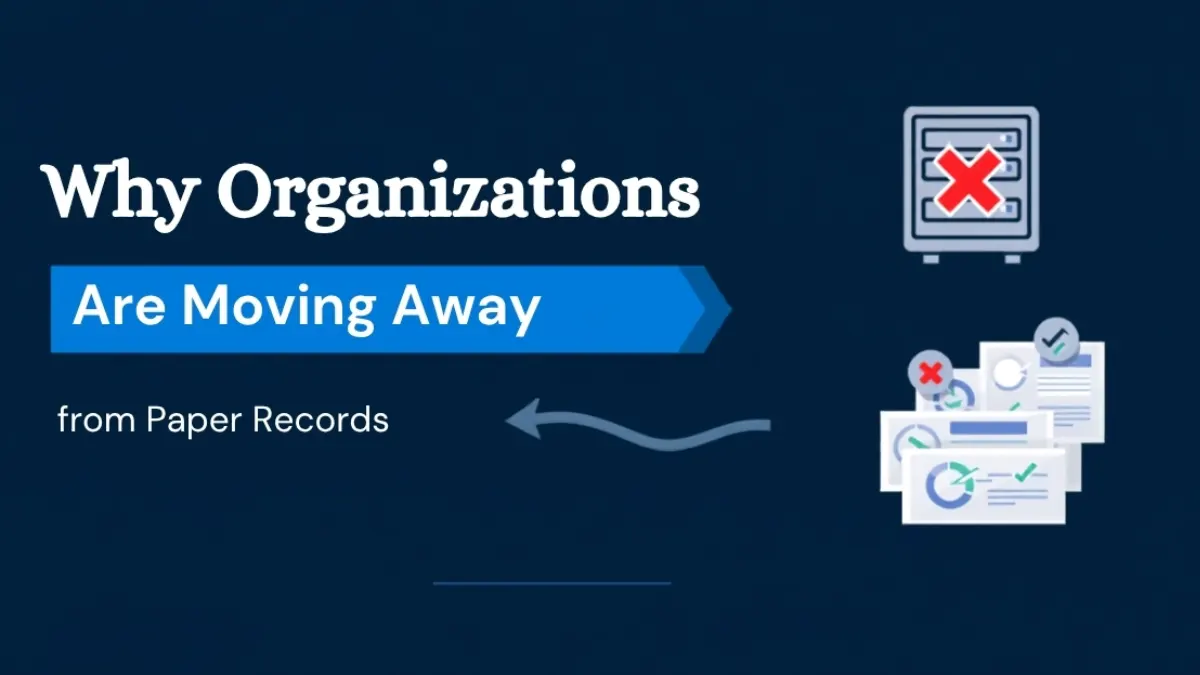
For the past hundred years, paper was simply how records worked. Filing cabinets, ledgers, folders labeled by year, it was slow, but at the same time it was familiar, no questions were raised since there was no alternative. That is no longer true. The shift isn’t happening simply because digital tools now exist. It’s happening because paper is becoming both more expensive and a riskier option to rely on, a shift already well underway among churches and nonprofits adopting platforms like Tabernacle to replace paper-based systems that were never built to scale.
Money is not wasted, but it is time
You can ask anyone who is in charge of managing a paper based file for a couple of years, and you will find out that they will not complain about the price of the paper, instead they will complain about the time they have lost. Finding a file which has been kept somewhere for the past few months, updating a record means retyping it by hand and hoping no old copies get left behind. If you need to check or compare between two files, it means opening both side-by-side and on top of that to manually search for mistakes.
None of this is an expense, it is the amount of time that has been wasted on work which has no value. “A McKinsey Global Institute report found that interaction workers spend close to 20% of their workweek simply looking for internal information, and that a searchable, organized record can cut that time by up to 35%.”
Paper is one accident away from disaster
A single fire, flood or even a pest issue can destroy decades of information in a file that exists in paper. In such an incident there is no recovery. A cloud base system can easily remove this problem. It might not be something that seems exciting, but it ensures that all the data which you have is saved in such accidents.
Auditors want digital proof, not paper trails
Over the years, the audit standards and its regulatory rules have changed across all the industries. In the past, when it came to record it meant seeing how fast someone dug through a filing cabinet. In the present days auditors expect digital trials, exact timestamps and instant search capabilities which paper simply cannot deliver. When the organization cannot provide an organized record, it may raise serious risk and legal issues.
A single person holds the system
One person holds all the knowledge when it comes to paper-based records. When a volunteer or staff member is the one who actually knows where everything is, which drawer, which file, how the records connect. Once you lose that person, whether they are sick, unavailable, retire, or about to quit the job, the entire system does not slow down. It will stop or not make sense to anyone else.
There are churches and small nonprofits which face the hardest hits when it comes to paper records. For example a treasurer or a secretary often manages the whole system records of the members and also the financial records. When such a person leaves, the whole system fails. Even when a new person joins, they will have to start from scratch of whatever the previous person has left. Digitizing church records removes that point of failure. The entire knowledge will always stay with the organization regardless of the person in charge.
What happens when records goes digital
Paper is not going anywhere, it’s tactile, immediate, and works without any electricity or any internet connections. But for organization managing more than some few records, many things shift once records move digital:
- Searching switches from physically locating a folder to typing a name and finding it within seconds
- Backup of any records or file becomes very easy.
- Depending on a single person stops, anyone can pick up the works left by the previous person
- Records can be produced immediately when need
- Can access any file or records anywhere with internet connection.
Conclusion
Moving away from paper doesn’t require replacing everything overnight. Most organizations that make this transition successfully start narrow, digitizing whichever records are most urgently needed or most vulnerable to loss, then expanding from there once the process proves itself. It’s less a dramatic overhaul and more a steady removal of single points of failure that paper systems quietly accumulate, year after year, without anyone quite noticing until something goes wrong.
The organizations that resist this shift longest usually aren’t resistant to technology itself. They’re often just under-resourced, run by people already stretched thin across too many responsibilities to prioritize a transition that feels optional, right up until the day it stops being optional at all.
Paper worked for a long time because there wasn’t a real alternative. That’s no longer the case. The organizations still relying on it heavily aren’t holding onto tradition so much as holding onto risk they haven’t fully priced in yet, and eventually, most find out the hard way what that risk actually costs.
Also Read: What Does Full Stack Development Actually Involve in 2026?


Using Nano Banana: When to Generate, Edit, or Remove a Background
Imagine preparing three images for a shop that sells desk lamps: a reading-corner illustration for its blog, a product photograph…

How to Keep Accurate Mileage Records With a Mileage Log App
Keeping accurate mileage records is an important part of managing business travel, vehicle expenses and tax documentation. Whether you are…