

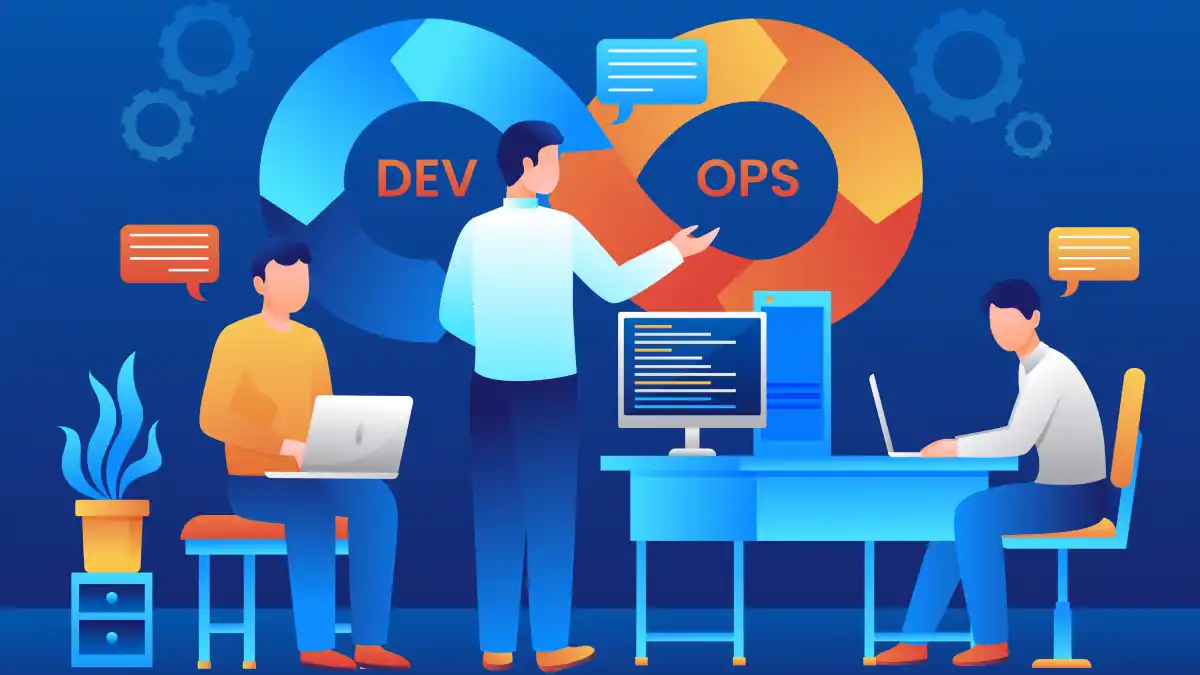
A full stack developer job was traditionally just for someone who could handle both the frontend and backend of a website reasonably well. That definition hasn’t really disappeared; it’s just gotten a lot bigger underneath. Companies now want someone who can take a feature from idea to something actually working, designing the interface, writing the backend logic behind it, wiring it up to a database, and often adding some AI functionality on top since clients tend to expect that by default at this point.”
Pune’s tech scene reflects this shift clearly. A full stack development course in Pune today needs to cover a lot more ground than it did even three or four years back. GCCs and product companies across Hinjewadi and Kharadi aren’t just hiring people who can stitch together a React frontend with a Node backend anymore; they want developers comfortable working with cloud deployment and at least basic AI integration too. Mumbai’s demand looks fairly similar, though it leans a bit more toward fintech and BFSI-driven platforms given how much of that industry is headquartered there, and those companies tend to care a lot about developers who understand production-grade systems, not just demo-ready ones.
There are many reasons why this is honestly a good time to get into the full stack job sector for what it is worth. But for now, we have one specific reason: real project experience generally carries more weight here than a stack of certificates ever will. So if you are someone who has actually built and deployed a working application, or for that matter even a small part of a large project, then usually interviewers have a better view of you than someone who has only finished isolated coding exercises and never connected any of it together as a GitHub project.
How Strong Is the Job Market for Full Stack Developers Right Now?
The numbers here back up what recruiters have been saying anecdotally for a while. Freshers entering the field in 2026 are generally starting somewhere between ₹4–8 LPA, with the exact figure depending heavily on whether they walk in with real project work behind them or just theoretical knowledge. Candidates who show up with a deployed application on GitHub, something beyond a tutorial clone, tend to land toward the higher end of that range fairly consistently.
Mid-level developers with three to five years of experience are commonly sitting in the ₹10–22 LPA bracket, and this is where the gap between product companies and traditional services firms really starts to show. Product-first companies and GCCs often pay one and a half to two times what a services company offers for the same experience level. Senior developers, five to eight years in, are regularly crossing ₹18–40 LPA, and leads or architect-level professionals push past ₹40 LPA fairly often now.
A handful of things are shaping this market, specifically heading into 2026:
- Cloud and DevOps familiarity now sits alongside core coding skills as close to mandatory, rather than a bonus most developers can skip picking up
- AI integration work has moved from niche to expected, with developers who can connect an application to an LLM API or a recommendation engine commanding a noticeable premium over generalist profiles
- GCCs are increasingly owning full product modules rather than just executing tasks, which has raised the bar for what a full stack hire is expected to independently deliver
- Pune ranks among the stronger cities for this hiring, sitting close behind Bengaluru and Hyderabad, and product companies expanding into Pune’s tech parks are a meaningful part of why local demand keeps climbing
None of this means the field’s easy to break into blind, though. The developers pulling ahead are the ones who’ve actually shipped something real during training, which is exactly why hands-on project work through a properly structured full stack training in Mumbai or Pune ends up mattering more than tool familiarity alone.
What Skills and Tools Do You Need to Be Proficient In Full Stack Development Work?
A lot of full stack programs still treat frontend and backend like two separate courses stitched together, a few weeks on HTML and CSS, then a sudden jump into backend logic, and hardly any real overlap shown between the two along the way. That approach leaves a gap that students only discover once they’re actually trying to build something that works end to end. This program was structured to close that gap early instead of leaving it for students to figure out on the job later.
The frontend stretch covers HTML, CSS, and JavaScript properly before moving into React, since jumping straight to a framework without understanding what it’s actually abstracting tends to cause more confusion than it saves time. Backend work follows with Node.js and Express, along with enough database knowledge, both SQL and MongoDB, to handle real data rather than toy examples that never scale.
Here’s roughly what gets covered as the program moves deeper:
- Building complete MERN or MEAN stack applications from scratch rather than only working with starter templates that hide most of the setup work
- API design and integration, including how to connect a frontend properly to backend services without the two ends fighting each other
- Git and version control, since almost no real development team works without it and self-taught learners often skip this until it’s too late
- Basic cloud deployment, getting an application actually live on a platform like AWS or Vercel instead of only running it locally on a laptop
- AI integration basics, connecting an application to an LLM API or a simple recommendation feature, since this has become close to a standard ask in interviews now
- Testing and debugging practices, catching issues before a feature ships rather than after a user finds them first
Students work through a handful of full applications during the Full Stack Course in Mumbai rather than isolated exercises, things like an e-commerce platform or a booking system, the kind of project that actually touches every layer of the stack at once. The capstone project usually reflects this too. Most students walk in with something genuinely deployable at that point, rather than a folder of half-finished code that’s never left their laptop.
What Jobs Will You Get After Completion Of This Full Stack Certification By SevenMentor?
Real numbers tend to carry more weight than promises, so here’s roughly where past batches from our Pune and Mumbai centres have landed.
Students joining with little to no prior coding background mostly started out in junior developer roles first, generally somewhere around ₹4–6 LPA depending on the company and city. A fair number of Pune placements landed at IT parks around Hinjewadi and Kharadi, while several Mumbai-based students found roles at fintech and BFSI-adjacent companies,s given how concentrated that industry is there.
Within a year or two, quite a few moved up once they’d built out a stronger project portfolio and picked up cloud deployment experience along the way, and pay for this group generally sat between ₹8–14 LPA. The ones who’d also gotten comfortable working with AI integration, connecting features to an LLM API or similar, tended to land toward the higher end of that range.
A smaller group who came in with some prior IT experience, often shifting over from a QA or support role, used this Full stack Course in Mumbai to move directly into mid-level developer positions, with a few crossing ₹12 LPA within their first offer post-certification.
None of these figures come with a guarantee attached, since outcomes still depend heavily on how many real applications someone’s actually built and how confidently they can walk an interviewer through their own architecture decisions. What’s held up fairly consistently across both cities, though,h is that students who treated deployment and project depth seriously, rather than stopping at working code on a local machine, ended up with noticeably stronger offers than those who didn’t.
How Do You Actually Get Started in Full Stack Development Training In Maharashtra?
Beginners tend to try learning everything at once. HTML gets a week, then a JavaScript framework gets rushed in right after, and backend work starts before either half actually feels solid, which usually just leaves someone stuck in the middle without a real sense of how any of it connects. There’s a steadier way to go about this instead.
Among the most important are HTML as well as CSS, and core JavaScript tools that deserve real attention first and foremost. Jumping ahead to React before this is solid tends to leave gaps that only show up later, right when something breaks, and the framework itself can’t explain why. Once the above skills are gained,d then the backend skills and fundamentals follow with things like Node.js and Express along with theoretical database knowledge to actually store and pull real data from online repos instead of working through some offline placeholder values that are given as part of training data.
Once you learn these skills together, then connecting both halves into full stack applications only really makes sense for you, and since you will learn to build end-to-end, this means that debugging two unfamiliar systems at the same time can also be an easier task for you at your Full Stack Job whenever you join one.
Structured Full Stack Courses in Pune or Mumbai tend to matter most right here, for anyone who’d rather get this right the first time instead of piecing it together slowly from scattered tutorials. An instructor catches bad habits early, well before they’ve had months to settle in, and students get exposed to full project work, including deployment, before the course even wraps up rather than only afterward through job hunting alone.
A few things tend to genuinely speed this process up,p no matter where someone trains from:
- Building complete applications instead of only following along with isolated coding exercises that never get connected into something real
- Deploying projects to an actual live environment rather than only running them locally, since that’s where a lot of the real learning quietly happens
- Getting outside feedback on code and architecture decisions, since it’s difficult to spot your own blind spots in something you wrote yourself
- Practicing explaining technical decisions out loud, since interviews increasingly test reasoning and system understanding rather than just syntax recall
Why SevenMentor Is a Strong Choice for People Who Want To Make A Career In Full Stack Development?
Quite a few institutes across Pune and Mumbai can claim similar things for their actual full stack training, like hands-on projects as well as placement support and industry-relevant curriculum,m as we can at Sevenmentor Institute. Most of it reads nearly identically until you’re actually sitting through the sessions yourself.
- Trainers with real development backgrounds, having built and shipped actual applications before teaching, rather than only ever presenting from a fixed slide deck
- Small batch sizes, usually under 20 students, so a genuine question about why an API call keeps failing doesn’t get glossed over just to keep class moving on schedule
- Full applications built during training, not isolated exercises, so students walk out having actually connected frontend, backend, and database work together at least a few times
- Deployment included as part of the curriculum, meaning students get real experience putting an application live rather than only ever running it on a laptop
- Flexible batch timings across both cities, weekday evening and weekend options, so the schedule bends around working professionals instead of the other way round
- Placement support running through the final stretch, resume help, mock interviews,s and direct introductions to hiring contacts across Pune’s IT parks and Mumbai’s fintech companies
- A free repeat option, so falling behind in one batch doesn’t mean paying again just to catch up in the next one
None of this is particularly flashy on its own. It just means students leave with real, deployed applications they can genuinely talk through, not a certificate sitting on top of code that’s never left a laptop.
Also Read: The Official Shopify Plugin for WordPress: Setup, Review and How to Sell on Your WordPress Website
What Does Full Stack Development Actually Involve in 2026?

What Does Full Stack Development Actually Involve in 2026?
A full stack developer job was traditionally just for someone who could handle both the frontend and backend of a…

10 Reasons Gold Loan In India Remains A Practical Borrowing Choice
Gold holds emotional, cultural, and financial value for many Indian households, often passed across generations as a dependable family asset….