


SPF validation always uses current sender IP addresses and maintains DMARC compliance What SPF Flattening Is and Why It Matters for Email Deliverability
Sender Policy Framework (SPF) remains one of the pillars of modern email security and authentication. An SPF record allows a domain owner to designate which email servers are authorized to send mail on behalf of their domain, effectively reducing the risk of email spoofing and phishing attempts. However, as organizations leverage an expanding array of email services — from Google Workspace to Salesforce and Mailchimp — their SPF records often become complex, with numerous SPF includes and nested includes. This complexity, if left unchecked, directly impacts email deliverability.
SPF flattening is a process that transforms a complex SPF record, which typically contains multiple include mechanisms and nested lookups, into a “flattened” SPF record. The flattened SPF record lists all permitted IP addresses directly, vastly reducing the number of DNS lookups required during SPF authentication and validation. The result is improved compliance with the SPF 10-lookup limitation while maintaining robust email security and deliverability.
While best practices in email infrastructure management dictate regular SPF record updates, and vigilant SPF maintenance, many businesses struggle to keep their records optimized. Improper SPF record management not only leads to SPF failures but can also trigger a permerror (permanent error) during SPF evaluation, causing emails to fail authentication checks at critical mailbox providers such as Gmail and Yahoo. A robust SPF flattening service ensures seamless SPF validation, enabling organizations to focus on their core operations without sacrificing sender reputation or DMARC compliance.
The SPF 10-DNS-Lookup Limit: Causes, Risks, and Common Failure Scenarios
RFC 7208, the definitive standard for SPF, enforces a hard DNS lookup limit: during SPF evaluation, no more than ten DNS lookups may be performed. This SPF 10-lookup limitation includes lookups initiated by include mechanisms, MX lookups, and other SPF includes. While ten may appear sufficient, modern organizations often use a mix of CRM platforms, marketing automation tools, and multiple email service providers, leading to rapid DNS lookup consumption—especially when nested includes and macro-based SPF rules are employed.
Causes of DNS Lookup Overruns
Nested includes are a frequent culprit. For example, an organization using Google Workspace, Salesforce, and a third-party mail gateway might see their SPF record call several external records, each with its own set of includes. This cascading effect dramatically increases DNS lookups.
Risks and Failure Scenarios
When SPF authentication is performed and the DNS lookup limit is breached, SPF validation fails with an SPF permerror response—“Too many DNS lookups.” This failure means the receiver cannot confidently validate the sender’s authority, resulting in dropped emails or relegation to the spam folder. Both sender reputation and deliverability suffer.
Large enterprises, financial services, insurance companies, and SMBs with multiple domains or subdomains tend to be most at risk, particularly if regular SPF maintenance and monitoring via SPF tools or an automated SPF checker is neglected. Improper SPF record management also makes DMARC alignment failures and subsequent DMARC compliance issues far more likely.
How an SPF Flattening Service Works: Static vs. Dynamic Flattening

An SPF flattening service automates the process of transforming a complex SPF record into a fully flattened SPF record that remains within the DNS lookup limit, preserving both security and deliverability. Leading SPF management providers such as AutoSPF, DMARC Duty, and DuoCircle offer both static and dynamic approaches, often backed by advanced SPF tools and integrations with DNS Providers like Cloudflare.
Static SPF Flattening
Static SPF flattening creates a flat IP address list by resolving all include mechanisms and nested includes at a point in time, then writing the resulting set of IP addresses directly into the SPF record as a TXT record. This approach ensures immediate compliance with the SPF 10-lookup limitation and is especially useful for environments with infrequent changes to their underlying email infrastructure.
Limitations of Static Flattening
A key drawback is that any change to third-party providers’ sending IP ranges means the static flattened SPF record can quickly become outdated, increasing the risk of SPF authentication failures. Frequent manual SPF record updates are required, making ongoing SPF maintenance a challenge.
Dynamic SPF Flattening
Dynamic SPF flattening, in contrast, leverages automated, scheduled DNS lookups and continuous monitoring to dynamically update the flattened SPF record whenever the IP addresses of third-party email services change. Providers like AutoSPF and DuoCircle’s SPF Flattening Tool offer this feature, combining advanced macro SPF management and audit logs for full visibility.
Dynamic SPF flattening offers robust protection against SPF failure by ensuring that SPF validation always uses current sender IP addresses, and that DMARC compliance maintain even as email services change.
Automatic SPF Flattening in Modern Infrastructure
Many leading SPF management platforms now support automatic SPF flattening and direct integration with DNS providers, including Cloudflare DNS and AWS Route 53. Enterprise SSO capabilities, white-glove onboarding, and SOC-2 Type II compliance cater to regulated industries like Financial Services and Insurance.
Benefits, Limitations, and Security Considerations of SPF Flattening in 2026
SPF flattening in 2026 has become foundational for organizations prioritizing email deliverability, DMARC alignment, and sender reputation. A modern SPF flattening service provides several tangible benefits but also presents certain trade-offs.
Key Benefits
- Consistent Email Deliverability: By enforcing the DNS lookup limit and preventing SPF permerror, organizations maximize their deliverability to major inboxes like Gmail and Yahoo.
- Simplified SPF Record Management: Reducing nested includes and complex SPF syntax makes SPF record management less error-prone, especially across multiple domains or subdomains.
- Automated SPF Maintenance: Dynamic SPF flattening tools ensure the SPF record remains accurate, adapting whenever email services providers like Cisco or Binance update their IP addresses.
- Improved DMARC Compliance: Reliable SPF validation is instrumental for achieving full DMARC compliance and successful DMARC alignment, minimizing risk exposure and enhancing email security posture.
- Comprehensive Auditability: With audit logs, organizations can track SPF record changes and maintain compliance standards (SOC-2 Type II).
Key Limitations
- DNS Record Size Limit: A flattened SPF record containing hundreds of IP addresses can approach or exceed DNS provider limits, as each DNS record TXT string is limited to 255 characters, with an overall record size constraint of 512 bytes.
- Lag in Updates: Infrequent SPF update frequency with static flattening can allow mismatches between authorized sender lists and actual sending IPs, risking SPF authentication issues.
- Reliance on Third Parties: Outsourced SPF record optimization, while efficient, introduces dependence on the SPF flattening service’s reliability and update cadence.
Security Considerations
SPF flattening must execute in a manner that preserves the integrity and intent of the original SPF record. Macro-based SPF or poorly-managed macro SPF management can inadvertently expose infrastructure details or inadvertently include unauthorized senders. Opting for reputable SPF management providers—such as those ranked highly on G2—and using well-audited solutions like SPF Report (dmarcreport.com), can mitigate these risks.
How to Choose and Implement the Right SPF Flattening Service
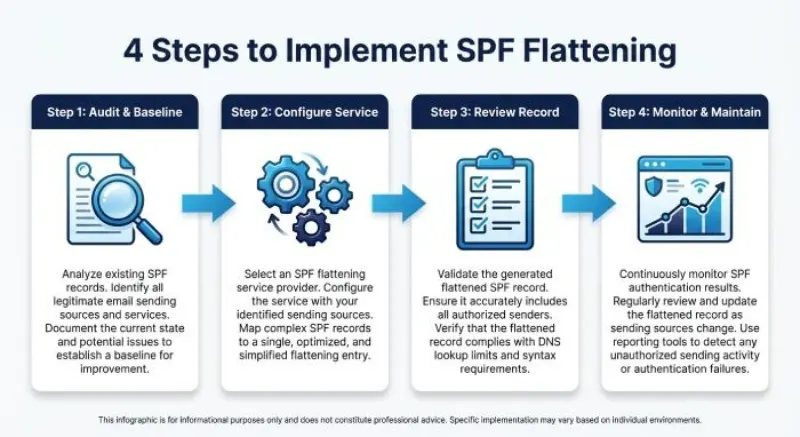
The market for SPF flattening services and SPF management providers has matured rapidly, driven by increasing email security demands and evolving regulatory expectations for DMARC, DKIM, and SOC-2 compliance. Selecting the right solution requires careful consideration of several key aspects:
Service Capabilities and Features
- Support for Dynamic and Automatic SPF Flattening: Ensure the provider offers real-time address resolution and automated SPF record updates for maximum deliverability.
- Deep DNS Provider Integrations: Direct update support for leading DNS management platforms (Cloudflare DNS, AWS Route 53, etc.) simplifies deployment and reduces manual intervention.
- SPF Checker and SPF Tools: Choose services with a robust SPF checker to continuously monitor SPF health, SPF validation status, and proactively alert on SPF authentication issues or DMARC compliance lapses.
Security, Compliance, and Support
- Audit Logs and Compliance: Look for solutions with granular audit logging, supporting regulatory frameworks such as SOC-2 Type II.
- White-Glove Onboarding and Enterprise SSO: For larger organizations and Mid-Market or SMB customers, white-glove onboarding and single sign-on ensure smooth implementation.
- Reputation and Industry Adoption: Consider leading entities—AutoSPF, DMARC Duty, DuoCircle (and its parent company)—with established reputations and customer bases spanning Financial Services, Insurance, and fast-growing technology sectors.
Implementation Steps
- SPF Record Audit and Baseline: Begin with a thorough audit using an SPF checker or tools like SPF Report to identify SPF syntax errors, excessive nested includes, and risks of SPF permerror.
- Configuration of SPF Flattening Service: Establish connections between the SPF flattening tool and your DNS provider. Import and parse existing SPF records for all relevant domains and subdomains.
- Review of Flattened SPF Record: Carefully verify the initial output, ensuring no authorized IP addresses or email services providers are omitted. Maintain backup copies and version history.
- Automated Monitoring and Maintenance: Activate automated SPF maintenance with appropriate alerting, tracking SPF update frequency, and changes in your email infrastructure.
By implementing a modern SPF flattening service, organizations can use SPF flatten technology to strengthen SPF authentication, maintain robust DMARC compliance, and achieve industry-leading email deliverability regardless of their scale or complexity.
SPF Flattening Service Explained: The Ultimate Guide To Improving Email Deliverability In 2026


SPF Flattening Service Explained: The Ultimate Guide To Improving Email Deliverability In 2026
SPF validation always uses current sender IP addresses and maintains DMARC compliance What SPF Flattening Is and Why It Matters…

5 Technical Bottlenecks Slowing Down Storefront Transactions
A slow checkout line often starts with a technical delay that lasts only a few seconds. Repeat that delay across…