

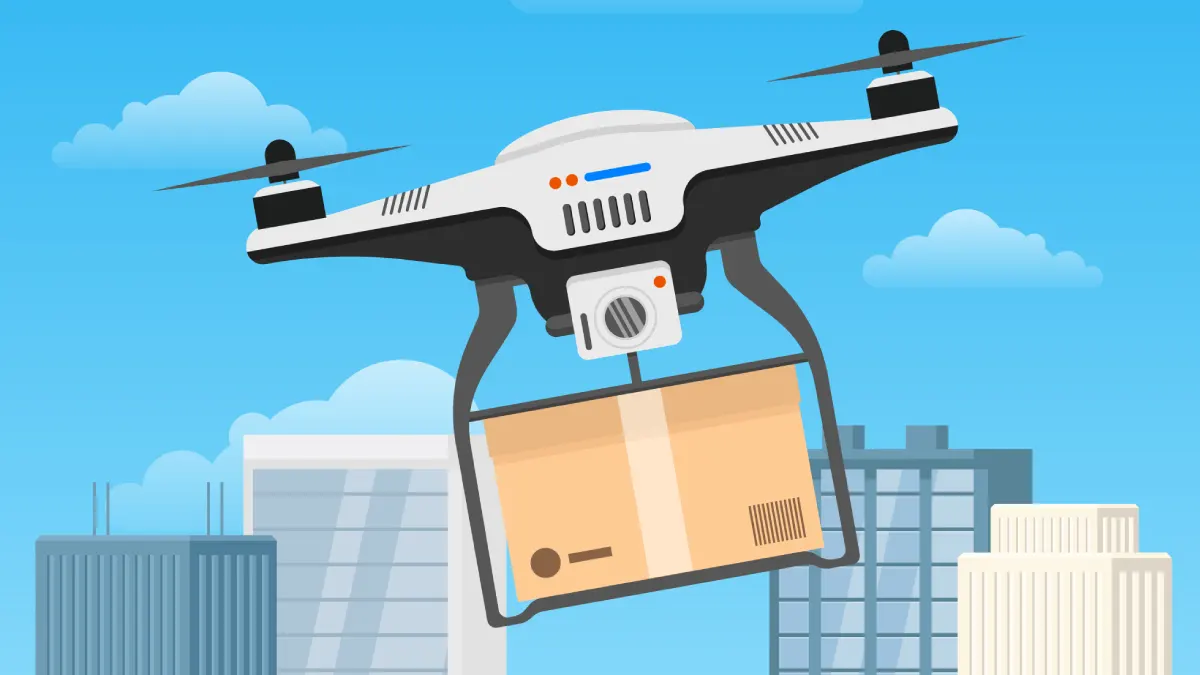
To ensure successful oversight of any project, any business must be able to access relevant information concerning the state of work at a given worksite, on a property, or within a developing area. While conventional means of surveillance can offer helpful insight, they can also be very time and personnel consuming, especially over large or inaccessible sites. Drones can allow businesses to have another avenue by which to observe developments, record-suit images, and even find issues at a worksite. Using these unmanned eyes in the sky can allow for better, quicker oversight on many projects.
Progress Monitoring
Using drones to capture a project progress from above could greatly benefit the managers by giving them an option to see the big picture. Instead of relying on their findings on the ground, they would be able to go through the photos and videos of the area from above. This could assist them in seeing if everything is on track or not and make it easier to go back and forth between the two. Having regular flights in the area would give a visual history that would show the path of progress of the project.
Aerial monitoring would benefit any project that involves worksites, buildings, commercial structures, or large areas. The managers would be able to see completed parts of the structures, ongoing worksites, materials stacked up, and more from above without having to visit every single one of them in person. All of these visuals would allow a bigger picture view of the project, which could allow the team to realize the discrepancy between the expected progress and actual progress before it becomes too late.
Site Inspections
Drones can make particular forms of inspection more practical by providing perspectives which would be hard, high or dangerous to achieve otherwise. Rooftops, towers, constructions and other worksites represent places which can often be seen from different angles by drone without necessarily putting people in those hazardous places directly. Thus drones can enable project managers to obtain initial insight before exposure to the worksite itself, limiting exposure to some occupational risks.
The images recorded by drones can also contribute to more thorough project inspections. Project managers can review the evidence gathered by a drone on a screen instead of relying on their visual inspection of the worksite during a brief inspection tour. When businesses make professional drone services Canada their choice, they can benefit from the aerial perspective without disrupting regular inspection and surveillance routines, achieving the best of both worlds.
Communication
Using photographs and video to record aerial images for documentation purposes is valuable for numerous reasons, which support the need for the development of the software. First, when working with numerous contractors, managers, and stakeholders, drone images provide an opportunity for visual evaluation of the site’s state and allow better assessment of the project’s stage. Instead of imagining the location based on a verbal description, teams can rely on visual materials and analyze the specific points of the region under study.
Aerial photographs and video footage offer the possibility to report project progress to stakeholders visually. Some stakeholders are unlikely to be able to view the site in person, so regular updates might help them keep track of the progress and become more engaged in the project’s outcome. In addition, visual records can assist different parties involved in the project in communicating their concerns and issues efficiently.
Problem Identification
Drones can help project teams spot potential issues that can arise on their implementation long before they cause serious delays or budget overruns. The aerial photographs can highlight misplaced, wrongly placed, or inadequate components or sections, as well as unexpected occurrences or circumstances requiring special attention. By doing so, they allow the managers time to determine the nature of the problems and take appropriate remedial measures before they interfere with other facets of the project.
Drones can enable project teams to detect deviations and see patterns that might not be discernible in day-to-day inspections. The ability to compare the images they capture at different times allows for spotting gradual developments and serves as a solid basis for investigating the apparent issues. Thus, the use of drones can become an essential element in ensuring general construction management quality control and meeting project requirements throughout the work’s scope.
Project Records
Keeping a good record is essential for any project management. Drone photographs and videos can help to keep updated records of the site at various points of the project’s timeline. Such records can relay the information about the state of affairs at a particular moment efficiently. Therefore, in case of discrepancies, disputes, or simple inspections, the up-to-date evidence can be beneficially used to review the past situation.
The drone record can be used in combination with other project records, such as reports, schematics, schedules, and inspection records. In combination with them, the drone photos and videos will help to build the bigger picture and have a common idea of what has been done and what is planned to be done. As a result, the managers will have a good overview and control of the whole project at any stage.
Drones can contribute to project oversight by providing enhanced project visibility, valuable insight, improved communication, and visual documentation. Their capacity to offer a birds-eye view can aid project teams in managing projects and identifying potential issues. By utilizing drones responsibly, project managers can ensure that projects that organized and progressing smoothly.
Also Read: The Ways Drones Can Help Businesses Improve Project Oversight


Seedance 2.0 Image-to-Video Prompts: Describe the Motion Your Photo Cannot Show
A still image can establish a room, a product, or a character in a single glance. It cannot tell a…

Adam Back Denies Being Satoshi Nakamoto
A British cryptographer has supposedly been outed as the creator of Bitcoin. According to the New York Times, Adam Back…