


The way we consume news has shifted dramatically over the last decade. Not long ago, a handful of major television networks and legacy newspapers held a virtual monopoly on information. If a story did not make it onto their evening broadcasts or front pages, it essentially did not exist for the general public. Today, that centralized gatekeeping is crumbling.
The rise of the internet has democratized information sharing, giving birth to a vibrant ecosystem of independent publishers. Audiences are no longer passive consumers; they are active seekers of alternative perspectives. Platforms like Amg news have emerged to fill the gaps left by mainstream reporting, offering readers a completely different lens through which to view global events.
The Growing Skepticism Toward Mainstream Outlets
To understand the popularity of independent outlets, we have to look at why trust in traditional media has declined. For years, media critics have pointed out the bias, corporate influence, and political alignments of major networks. When news organizations rely heavily on corporate sponsors and government access, their reporting can become cautious, predictable, and sometimes outright selective.
Many readers feel that mainstream news avoids digging into controversial topics or challenging official narratives. This skepticism has created a massive demand for unfiltered journalism. People want raw information, investigative pieces that ask tough questions, and opinions that do not have to pass through a corporate filter.
This is where alternative media platforms step up. By operating outside the boundaries of traditional editorial rooms, independent outlets can cover stories that might otherwise be ignored. Whether it is geopolitical analysis, domestic policy debates, or deep dives into underreported social issues, these platforms provide a space for conversations that mainstream channels often bypass.
The Role of Technology in Decentralizing News
Running a news organization used to require multi-million dollar printing presses, broadcast towers, and massive distribution networks. Today, all it takes is a domain name, a secure server, and a passion for truth. Technology has leveled the playing field, allowing small teams of dedicated writers to reach global audiences overnight.
Modern content management systems and affordable web infrastructure have made publishing incredibly accessible. For bloggers, journalists, and independent creators, utilizing clean, optimized code and fast web tools is key to surviving in a competitive digital space. Platforms often rely on minimalist web resources and smart coding practices—similar to the lightweight utilities found on lite14 – to ensure their sites load instantly for readers on mobile devices, regardless of their internet speed.
This technological shift means that independent news is no longer a niche, hard-to-find corner of the web. It is fast, accessible, and highly shareable on social media.
Why Diverse Perspectives Matter
A healthy democracy relies on an informed public, and true information cannot exist in a vacuum. When everyone gets their news from the exact same sources, public discourse becomes echo chambers. Having access to multiple viewpoints encourages critical thinking and pushes people to do their own research rather than accepting headlines at face value.
Independent outlets often champion investigative reporting that focuses on local communities or global events from the ground up, rather than from a top-down bureaucratic perspective. They allow citizen journalists to share firsthand accounts, offering an authenticity that is hard to replicate in a highly produced studio environment. While readers must always practice media literacy and verify claims, the sheer availability of diverse sources is a massive net positive for free speech and public awareness.
Navigating the New Media Landscape
As we move further into the digital age, the line between traditional and independent media will continue to blur. Established networks are trying to copy the agile, conversational style of online creators, while independent platforms are continuously professionalizing their operations to build long-term trust.
For the modern news consumer, the message is clear: do not rely on a single source of truth. Engaging with a mix of established reporting and independent analysis—such as the coverage found on Amg news—provides a much more complete, nuanced picture of our complex world. By supporting independent voices and staying curious, readers can ensure that the press remains free, diverse, and accountable to the people rather than the powerful.
Also Read: APIPA Explained: What It Is, Why It Happens, and How I Fix APIPA Address Issues


What Is Zero Trust as a Security Model and How Does It Work
For decades, corporate security worked like a castle. Organizations built a strong perimeter, guarded the entry points, and trusted almost…
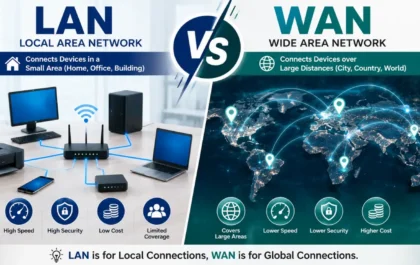
LAN vs WAN: What’s actually different (and why your icons look weird)
Quick, honest question. You plug an ethernet cable into your router, you see your laptop, your printer, and a “WAN”…