

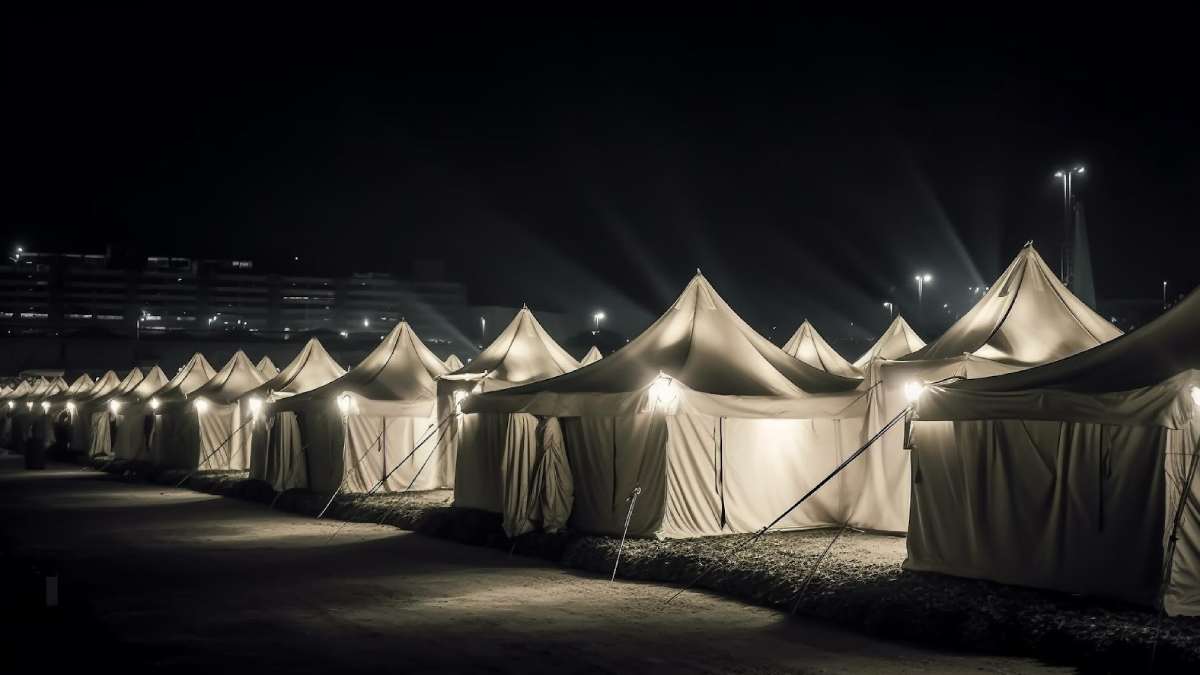
Promotional events and business fairs in outdoor settings, farmers’ markets, and even corporate trade shows rely heavily on durable canopy tents to establish visibility and operational display areas. Tent frame design has a vital impact on durability, portability, and sustained worth. Trade show inflatables may be used in modern marketing displays, yet in a traditional setting, a canopy tent is one of the most pleasing solutions for outdoor branding and temporary business settings. The choice of frame material is thus a significant factor for business ventures that intend to use tents on a recurring basis throughout the year. The commercial canopy market is dominated by steel and aluminum frames, each with specific benefits based on the application they are intended for. Knowledge of the behavior of these materials under various conditions will help ensure that the chosen structure provides reliability, stability, and durability.
Five Major Differences Between Steel and Aluminum Canopy Frames
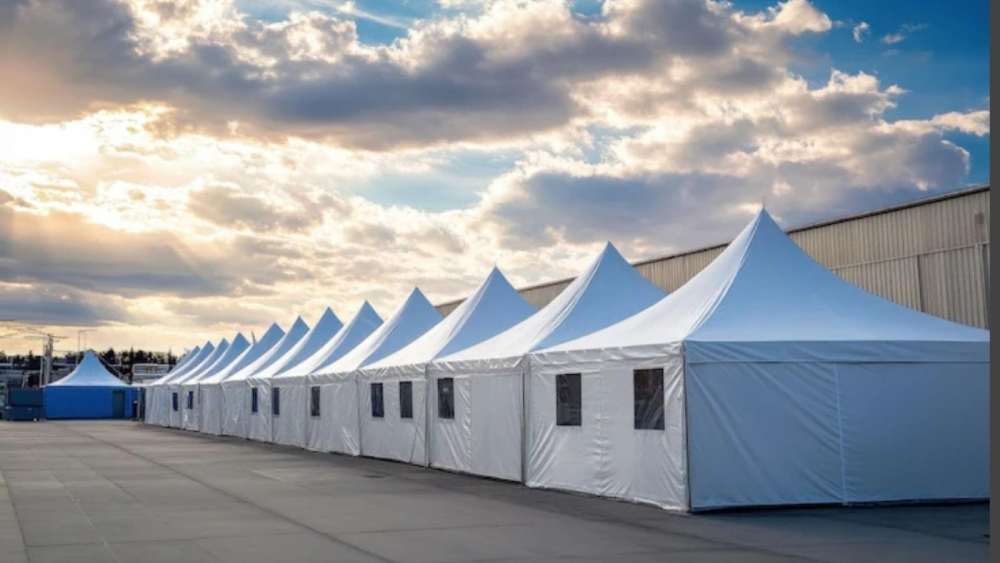
1. Power and Durability in High-Performance Uses
Steel frames usually prove to be a superior structural solution when stability is the paramount consideration. Businesses operating a tent for food vendors or large outdoor booths often use steel frames since they can hold heavier materials and withstand stronger winds. The thick mass of steel gives the piece a firm foundation, which does not bend and twist with use in the outdoors.
Steel frames are also ideal in a situation where tents are frequently left for a long duration. The rigidity in the structure that steel offers is commonly used in farmers’ markets, street food festivals, and semi-permanent outdoor kiosks. This strength shortens the chances of the frame being deformed in cases where it is subjected to repetitive stress.
2. Portability and Easy Movement
Frames made of aluminum have a great chance of portability. Due to the difference in weight, aluminum is much lighter than steel; therefore, aluminum-framed tents can be transported, carried, and set up with ease. This is a feature that is especially useful in a business that travels a lot between events or trade shows.
Lightweight construction makes the process of setup and breaking down easier. The frames of the aluminum canopy can be moved fast and do not need the use of heavy lifting devices. This mobility enables the exhibitors to move the displays with ease within the venues and the event space.
3. Corrosion and Weather Resistance
External activities put canopy tents in a vulnerable position with regard to wetness, temperature variations, and environmental degradation. The frames are made of aluminum, and there is no rust or corrosion, so the frames can be used in humid or coastal environments where steel might need extra protective coating.
Although the steel frames are usually sprayed with powder paint or galvanized to avoid corrosion, they can easily be worn off when not taken care of. The natural resistance of aluminum to oxidation enables it to have structural integrity with very little maintenance.
4. Long-lasting Strength and Service
The concept of durability is determined by the long-term maintenance needs, as well as the strength of the materials. Steel frames are good because they can withstand heavy mechanical forces. Hence, they are applicable in situations where tents are expected to remain for extended periods in extreme environments.
Nonetheless, the steel construction should also be inspected periodically in order to make sure that the protective covering is not broken. When untreated metal is revealed by the scratches, it can become rusted with time. Frequent cleaning and periodical touch-up paintings are activities that preserve the structure.
Aluminum frames also need very little maintenance since they are not subject to rust. Light oxidation can happen, but it usually develops a protective surface layer without structural damage. This is because of its low-maintenance benefit that makes aluminum appealing to organizations that want to have quality equipment with low maintenance.
5. Economy and Long-term Investment
Budget is also a factor that impacts the choice of frames, be it steel or aluminum. Steel canopy tents are not expensive at first because steel is relatively low-cost. This low cost makes steel frames attractive to business ventures that find themselves in the trade show arena for the first time.
Nevertheless, aluminum frames can provide superior value over time even though they cost more. Their lightweight design helps them reduce transport costs and labor requirements during event setup. Also, corrosion resistance reduces the cost of maintenance in the long run.
The operational costs of aluminum frames can be offset by the higher purchase price for organizations whose operations regularly involve traveling to events or attending several exhibitions annually. On the other hand, steel frames can be a cheaper option for businesses that need permanent or semi-permanent structures.
End Point
The choice of the most appropriate canopy tents frame will involve compromising among strength, portability, durability, and long-term maintenance. Steel frames have outstanding stability and load-bearing capacity, making them suitable for harsh environments or semi-permanent outdoor structures. On the other hand, aluminum frames are more portable, more corrosion-resistant, and require less maintenance. Assessment of each material’s performance under real-world conditions will enable businesses to select a canopy structure that can maintain structural performance reliability, simplify setup for the event, and provide value to the outdoor event and promotional show.
Also Read: Money Back vs Term Insurance: Which Is the Better Investment Plan?


How Corporate Results and Buybacks Influence Stock Prices?
As an investor or trader, you must have noticed stock prices moving sharply following news and announcements. Among these developments,…

What Employers Must Understand Regarding Occupational Health Services
Through the evolution of work, employee wellness has transitioned from being an ancillary consideration to being one of the central…