


Creative work often begins with uncertainty. You know what you want to feel, but not how to produce it. Tools like AI Music Generator attempt to resolve this gap by converting descriptive intent into audible results, effectively shifting the decision-making process from execution to articulation.
This changes not only how music is created, but how creative choices are made.
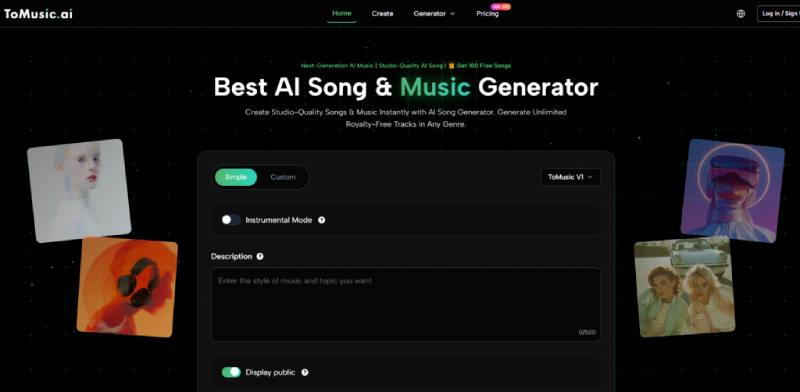
Why Decision Making Becomes Central in Text-Based Systems
In traditional workflows, decisions are distributed across many stages. In text-based systems, they are concentrated at the beginning.
Front-Loaded Creative Choices
Users must decide:
- emotional tone
- stylistic direction
- pacing and energy
- vocal presence
These decisions directly influence the output, making the initial input more important than any later adjustment.
Reduced Iteration on Technical Details
Instead of refining individual elements, users refine their descriptions. This creates a different type of feedback loop—one based on language rather than audio editing.
How the System Translates Decisions Into Music
The system acts as an interpreter between human intent and musical structure.
Mapping Language to Musical Parameters
Each descriptive element corresponds to a technical parameter:
- mood → harmonic progression
- tempo → rhythmic structure
- instrumentation → timbral selection
- style → arrangement patterns
This mapping is not always transparent, which explains some unpredictability in results.
Combining Parameters Into Cohesive Output
The system integrates these parameters into a single composition, balancing them to maintain coherence. In my observation, stronger prompts lead to more stable outputs.
Role of Structured Input in Reducing Ambiguity
Using Text to Music generator introduces constraints that guide the system more precisely.
Lyrics as Structural Anchors
Lyrics provide timing and phrasing cues, helping the system align melody with language.
Section Markers as Control Points
Markers like verse and chorus define transitions, reducing ambiguity in composition.
This approach improves predictability but may limit creative variation.
Workflow Breakdown From User Perspective
The platform’s simplicity hides the importance of each step.
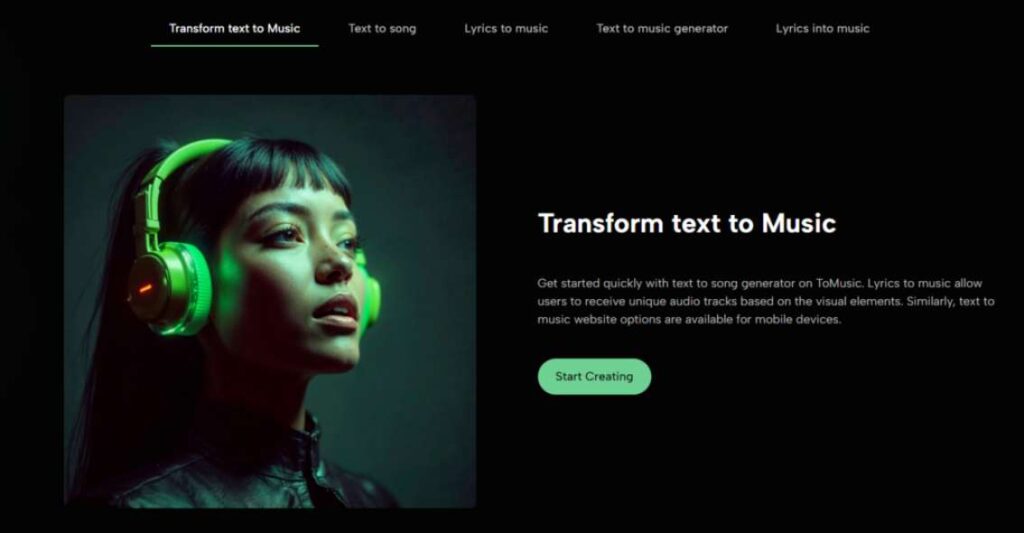
Step 1: Select Generation Context
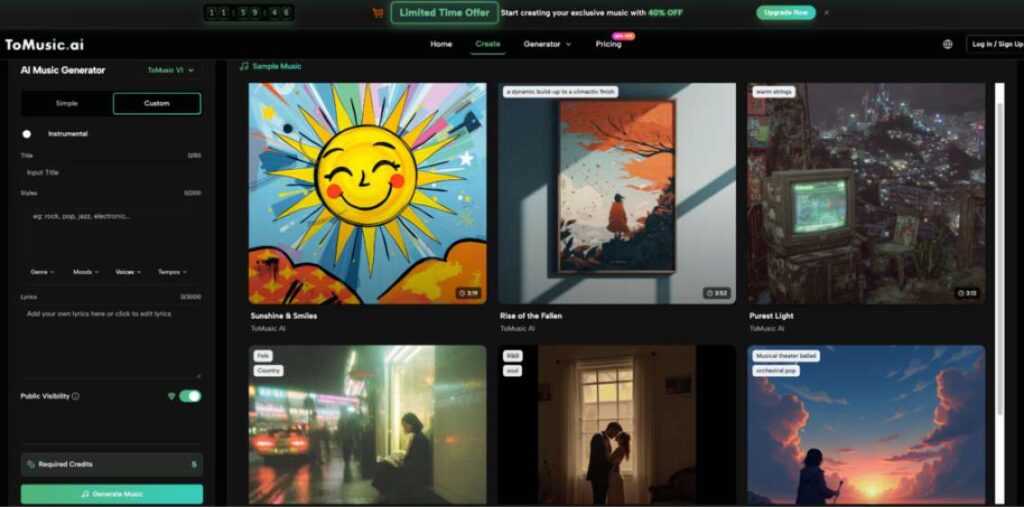
Users choose:
- model version
- vocal or instrumental mode
- level of control
Each choice affects how the system interprets input.
Step 2: Define Intent Through Input
This can be:
- a descriptive prompt
- structured lyrics
- a combination of both
Clarity at this stage is critical.
Step 3: Generate and Evaluate
The system produces a track, which is then evaluated. Adjustments are made by refining input rather than editing output.
Comparing Decision Paths Across Different Methods
Different workflows emphasize different types of decisions.
| Method | Decision Focus | Outcome Characteristic |
| Free description | Emotional direction | More varied results |
| Structured lyrics | Narrative structure | More consistent output |
| Instrumental mode | Atmosphere and texture | Cleaner sound design |
Understanding these paths helps users choose the right approach for each project.
Where This Approach Provides Practical Value
Text-based systems are particularly effective in scenarios where flexibility is required.
Rapid Prototyping of Ideas
Creators can test multiple directions quickly without committing to a single production path.
Content Production at Scale
For high-frequency content, speed and adaptability become more important than perfect fidelity.
Cross-Disciplinary Creative Work
Users from non-music backgrounds can integrate audio into their projects without learning complex tools.
Limitations That Influence Decision Quality
The system’s reliance on input introduces certain constraints.
Ambiguity in Language
Descriptive language can be interpreted in multiple ways, leading to inconsistent results.
Lack of Granular Control
Users cannot directly manipulate individual components after generation.
Dependence on Iteration
Achieving a specific result often requires multiple attempts, especially for complex compositions.
How Creative Roles Continue to Evolve
The system changes not just how music is made, but who makes it.
Shift Toward Conceptual Thinking
Creators focus on defining intent rather than executing techniques.
Increased Importance of Prompt Design
Writing effective prompts becomes a core skill, influencing both efficiency and output quality.
Implications for Future Creative Systems
Text-based music generator reflects a broader shift toward abstraction in creative tools. By reducing technical barriers, it allows more users to participate, but also places greater emphasis on clarity of thought.
In this sense, evolution is not about replacing traditional methods, but about expanding the ways in which creativity can be expressed.
Also Read: 5 Best AI Dubbing Tools in 2026 for Video Translation & Localization

Fewer Tabs, Fresher Adverts: What Job Posting APIs Mean for UK Recruitment Teams
Ask any in-house recruiter or agency consultant in the UK where their week goes, and a surprising share of the…


How AI Image Generation Is Changing the Way We Create Visual Content
Creating high-quality images used to require a combination of design skills, expensive software, photography equipment, and plenty of time. Today,…