

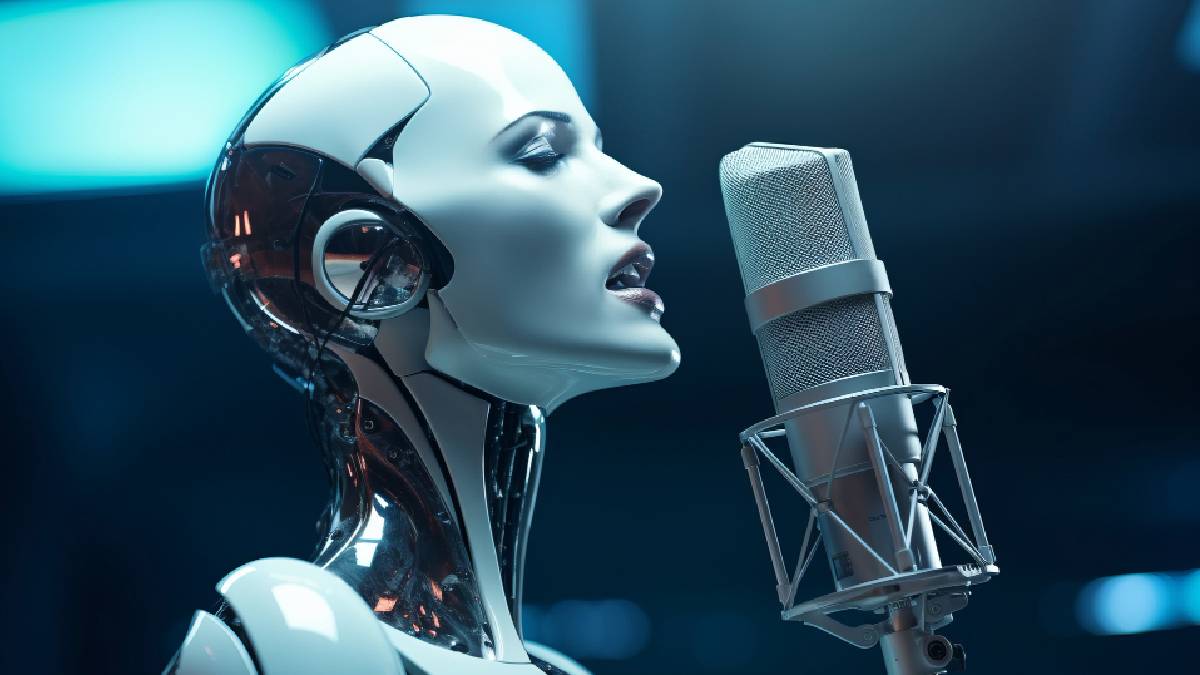
I’ve tested enough creative software over the last few years to know that most “workflow breakthroughs” are usually just minor iterations. But as 2026 approaches, our approach to video localization has completely changed—it is no longer only an iteration. The days of waiting three weeks for a localized marketing campaign and employing five separate voice actors are essentially history.
Whether you are a CMO at a scaling SaaS company or a creator looking to tap into the Spanish or Hindi markets, AI dubbing has become the “silent shield” behind global growth. In this guide, I’ll break down the state of the industry and analyze the five tools currently leading the charge in international marketing localization.
The “Localization Gap” of 2026: Why AI Dubbing Matters
Traditional dubbing used to be the playground of big-budget film studios. For the average business, the “Localization Gap”—the distance between your English content and a global audience—was too expensive to bridge. You either settled for clunky subtitles that 30% of viewers ignore, or you simply didn’t expand.
More than 80% of internet traffic worldwide is currently video. According to industry data shared on LinkedIn. Neural dubbing has also hit a “human-parity” barrier in 2026, where the typical listener can no longer tell the difference between an AI clone and a natural speaker in 92% of testing, according to Wikipedia’s updated entries on machine translation entries.
What Exactly is AI Dubbing? (The Simple Version)
“AI Dubbing” frequently sounds more technical than it actually is. It is fundamentally a succession of three different technologies working together:
- Transcription & Translation: Translating your audio into text and then into the language of your choice.
- Voice Cloning: Making the new language sound like the original speaker by using a “fingerprint” of their voice.
- Lip-Syncing: Using computer vision to adjust the speaker’s mouth movements so they match the new phonemes of the translated language—so easy-peasy.
5 Best AI Dubbing Tools in 2026
When choosing a tool for marketing, you aren’t just looking for “robotic” translation. You need emotional resonance. You need a tool that understands that a marketing pitch in New York requires a different “vibe” than a product demo in Tokyo.
1. VMEG AI: The Professional Localization Workspace
While many AI tools are designed for quick “one-off” translations, VMEG AI has positioned itself as a comprehensive “Localization Workspace.” It is designed for teams that view video translation as more than just an automatic overlay; rather, it is a real post-production step. It bridges the gap between raw AI output and studio-quality outputs by providing a dedicated editing studio and human-in-the-loop features.
alt: VMEG AI
Key Features:
- Voice Cloning: VMEG provides two voice styles—“Consistent” for stable, long-form narration, and “Emotional” for expressive, dynamic storytelling—so you can match the tone to your content.
- Advanced Lip-Sync Architecture: Using proprietary technology, VMEG analyzes facial movements and speech patterns to re-render mouth movements. In 2026, who can keep the so-called “illusion of reality” is critical, which means that all the “B” or “P” sounds (translated phonemes) visually match the speaker’s lips.
- Direct-Link Integration (Zero-Download Workflow): The platform makes it easy for users to integrate content straight from YouTube, Instagram, TikTok, and even Zoom. This action greatly speeds up the localization pipeline by avoiding the hassle of downloading and re-uploading big 4K files.
- Multi-Speaker & Background Sound Isolation: Up to ten distinct speakers can be identified in a single clip thanks to its “Smart Scene” identification. Most importantly, it separates the human voice from background music and effects so that just the dialogue is changed, leaving the background score unaltered.
- 170+ Languages with Dialect Precision: VMEG supports over 7,000 lifelike voices across 170+ languages. This includes specific regional accents, which is vital for “Hyper-Localization”—ensuring a campaign for the Mexican market doesn’t sound like it was recorded in Madrid.
Pros:
- High-Fidelity Rendering: One of the few browser-based tools that handles 4K exports without significant lag.
- Flexible Output Formats: Beyond MP4 video, it allows for SRT (subtitle) and MP3 (audio-only) exports, making it ideal for multi-channel distribution.
- User-Centric Editor: The interface mimics a simplified professional NLE (Non-Linear Editor), allowing for frame-by-frame adjustments of translated text and subtitle placement.
Cons:
- Advanced Learning Curve: Because it offers deep controls for pitch, tone, and pacing, users may need time to master the platform to achieve “perfect” results.
2. HeyGen: The King of Visual Personalization
If your marketing strategy relies heavily on “talking head” videos or personal brand ambassadors, HeyGen is likely already on your radar. In 2026, they have doubled down on their “Video Agent” technology.
alt: Best AI Dubbing Tool – HeyGen
Key Features:
- Instant Avatar 3.0: You can record a 15-second clip of yourself on your phone, and HeyGen creates a digital twin that can speak any language with your exact facial expressions.
- Real-Time API: This allows businesses to create “interactive” localized videos where the AI can respond to user input in real-time.
- Direct Voice Mirroring: It maintains the specific “prosody” (the rhythm and melody) of your original speech, preventing the “Siri-like” monotony.
Pros:
- Unrivaled for personalized sales outreach (BDRs love this for “custom” localized demos).
- Interface is incredibly sleek and user-friendly.
Cons:
- Can become very expensive for long-form content (documentaries or long webinars).
- The “AI-generated” look is still occasionally visible in complex lighting environments.
3. Rask AI: Speed and Creator Efficiency
For the “fast-fashion” equivalent of video—social media content and trending clips—Rask AI is the industry favorite. It is built for speed and ease of distribution.
alt: Best AI Dubbing Tool – Rask AI
Key Features:
- Shorts Creator: It can take a long-form video (like a podcast), identify the most “viral” moments, dub them into five languages, and format them for TikTok/Reels automatically.
- Live Stream Dubbing: A newer feature for 2026 that allows for near-instantaneous dubbing of live webinars with only a 5-second delay.
- Rewriting for Time: If a German translation is 20% longer than the English original, Rask’s AI automatically shortens the sentence structure so the audio doesn’t have to be sped up unnaturally.
Pros:
- The best mobile app experience for on-the-go localization.
- Incredible for high-volume YouTube “global” channels.
Cons:
- Less control over the fine-tuning of voice pitch compared to VMEG.
- Sometimes struggles with technical, industry-specific jargon in niche fields like medical tech.
4. Deepdub: The Cinematic Standard
Deepdub sits at the high end of the market. While they have introduced self-serve tools, they remain the go-to for “prestige” content—think masterclasses, high-end brand films, and streaming entertainment.
alt: Best AI Dubbing Tool – Deepdub
Key Features:
Performance-Based AI: Instead of just translating words, Deepdub analyzes the “acting” behind the voice. If the original speaker is whispering or shouting, the AI clone does the same.
Theatrical Grade Audio: Supports 5.1 and 7.1 surround sound mixing within the AI dubbing workflow.
Deepdub Go: A simplified version of their enterprise tech designed for smaller marketing teams who still want “Hollywood” quality.
Pros:
- The most “human” sounding output available in 2026.
- Robust security features make it a favorite for enterprise-level legal and financial firms.
Cons:
- The most expensive option on this list.
- Generally requires more “manual” oversight to get the perfect result.
5. Dubverse: Mastering Regional Dialects
Dubverse has carved out a massive niche by focusing on the “Global South.” While many tools struggle with the nuances of various Indian, African, and Middle Eastern dialects, Dubverse excels here.
alt: Best AI Dubbing Tool – Dubverse
Key Features:
- Speaker Library: Access to a vast “marketplace” of pre-vetted AI voices that represent specific regional demographics.
- Human-in-the-Loop (HITL): A built-in feature where you can pay a small fee to have a native speaker review the AI’s translation for cultural nuances.
- Real-time Collaboration: Multiple team members can leave “time-stamped” comments on a dub, much like a Google Doc.
Pros:
- Exceptional accuracy for languages like Hindi, Arabic, and Vietnamese.
- Very competitive pricing for small businesses.
Cons:
- The lip-syncing technology is slightly less advanced than HeyGen or VMEG.
- The UI can feel a bit cluttered with too many “marketplace” options.
How 2026 Technology Solves the “Sync” Problem
One of the most common questions on Quora regarding AI dubbing is: “Why does the mouth never match the words?”
In 2026, this has been largely solved through Generative Facial Re-Animation. Earlier versions of these tools would simply try to “stretch” the video frames to fit the audio. Today, tools like VMEG and HeyGen use a technology called Neural Lip-Syncing.
Instead of stretching the original video, the AI uses a 3D model of the speaker’s face. Regardless of what the individual was doing in the original English video, the AI creates new pixels that seal the mouth at that precise time when the person makes a “B” sound in Spanish, which requires closing the lips. This explains why localized videos from 2024 don’t feel nearly as “native” as stuff from 2026.
Strategic Guide: Which Tool Fits Your Business?
Choosing between these five isn’t about which is “best,” but which fits your specific marketing objective.
| Marketing Need | Recommended Tool | Why? |
| B2B SaaS Product Demos | Vmeg AI | Best for handling screen-shares, UI text, and professional narration. |
| Founder-Led Personal Branding | HeyGen | Your “Digital Twin” can be everywhere at once without you recording twice. |
| High-Volume Social Media | Rask AI | The fastest “input-to-output” pipeline for short-form content. |
| Premium Brand Storytelling | Deepdub | When the “emotional” performance is as important as the message. |
| Expanding into Emerging Markets | Dubverse | Unrivaled dialect accuracy for the Asian and African markets. |
Conclusion
Although the IT industry evolves quickly, one of the biggest changes to the corporate community in the next ten years is the adoption of AI dubbing. By 2026, the question will not be whether or not to localize your video content, but rather what tool to utilize.
You are no longer constrained by the language you speak, whether you opt for the comprehensive workspace of VMEG AI or the cinematic depth of Deepdub. Your creativity is the only thing that limits you.
Would you like me to investigate more closely any of these tools’ API documentation or even provide a detailed “How-To” guide to help you set up your first VMEG AI project?
Also Read: What Beginners Get Wrong About Image to Video AI – and What Actually Works

Is Designing a Website from Scratch Really That Difficult?
The notion of website design often appears to be a nearly impossible task for those with little prior experience. HTML…
Types of Email Campaigns Every Marketer Should Use to Engage and Convert Customers
Email marketing is one of those channels that keeps proving skeptics wrong. The types of email campaigns you run determine…