

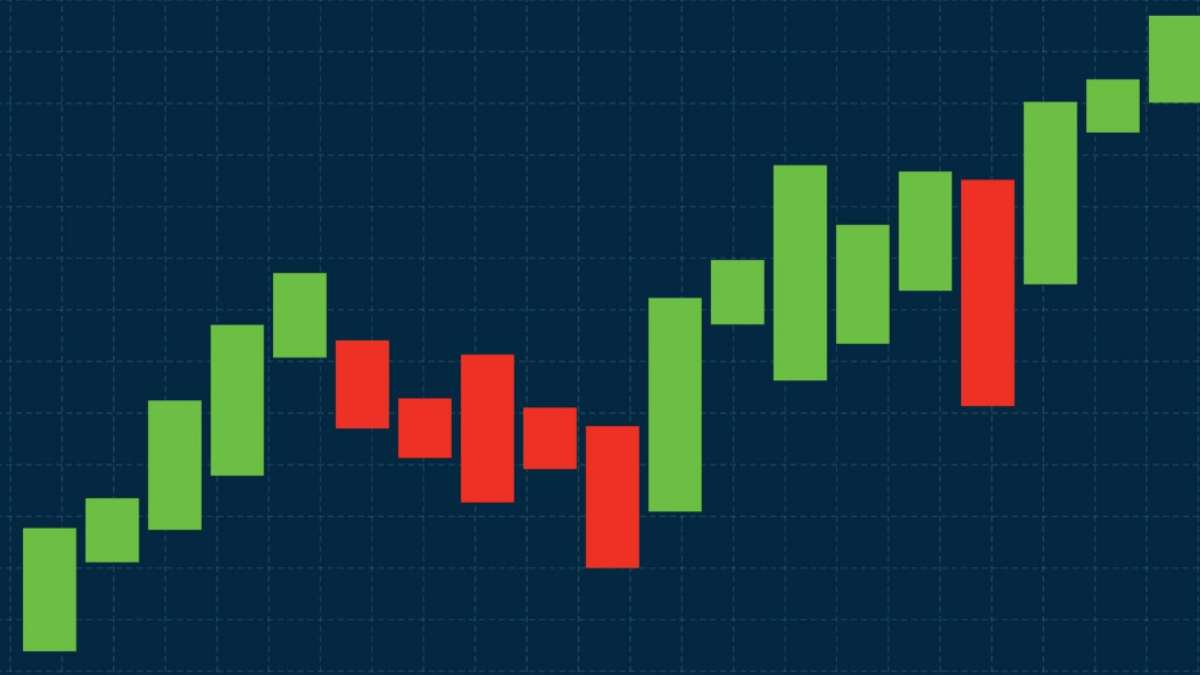
Price charts tell stories, but not always in obvious ways. Sometimes a single candle can reveal hesitation, rejection, exhaustion, or a possible reversal in market sentiment. That is why candlestick analysis is still one of the most widely used in technical analysis.
Single candlestick patterns are useful because they can offer quick visual clues without any complex calculations. But they should not be treated as automatic buy or sell signals.
Let’s look at five important single candlestick patterns that beginner to intermediate traders should understand.
1. Doji
A Doji forms when the opening and closing prices are very close to each other. It has a very small or nearly invisible body. Doji signals indecision. Neither buyers nor sellers managed to gain clear control during the session.
A doji is usually a sign of confusion in the market. If it occurs following a strong uptrend, it could be a warning sign of weakening buying momentum. It may indicate that selling pressure is fading after a downtrend. This is the first on our list to learn candlestick trading for beginners.
2. Hammer
The Hammer is a bullish reversal candlestick pattern. It has a small real body near the top and a long shadow. It has very little or no upper shadow. And, it represents that the sellers pushed the prices lower during the session, but buyers stepped in before the candle closed.
The hammer suggests a potential reversal after a decline. It represents that buyers are rejecting the lower levels. Although the hammer signals potential reversal, the confirmation from the next candle is important.
3. Hanging Man
The Hanging Man looks very similar to the Hammer, but context changes its meaning. It appears after an uptrend rather than a downtrend. It has a small real body near the top and a long lower shadow. And, it may have a little or no upper wick.
Even though buyers may still close the session near the highs, the long lower shadow suggests sellers were active. This can be an early warning of weakness.
4. Shooting Star
A shooting star is a bearish reversal pattern, which usually appears after an uptrend. It has a small real body near the lower end and a long upper wick. It has little or no lower shadow.
The pattern reflects rejection of higher prices. It suggests a weakening of bullish momentum.
5. Marubozu
A Marubozu is a strong momentum candlestick with little or no shadows. It can be bullish or bearish. A bullish Marubozu closes near the high and opens near the low. A bearish Marubozu does the opposite.
This pattern reflects strong directional conviction. A bullish version suggests aggressive buying. A bearish version suggests strong selling pressure.
Conclusion
Single candlestick patterns are useful visual tools for understanding buyer and seller behaviour. These candlestick patterns are very easy to interpret. But the context is more important than the interpretation. Although the candlestick patterns represent market behaviour, they are not fully reliable. Context and confirmation are required for these patterns. To learn more, consider the best technical analysis course from Upsurge.club.
Also Read: Application Scenarios of SMA to MCX Cables in Wireless Communication Devices


Dynamics 365 Migration: Thinks to Know Before a Single Record Moves
Most migration projects do not fail because the tooling is weak. They fail because the team treated the move as…

Fewer Tabs, Fresher Adverts: What Job Posting APIs Mean for UK Recruitment Teams
Ask any in-house recruiter or agency consultant in the UK where their week goes, and a surprising share of the…