


When Broadcom completed the VMware acquisition and restructured the licensing model, many GCC enterprises received a number they weren’t expecting on their next renewal.
We’re talking cost increment often crossing the line of 400%. It’s not incremental adjustments, but overnight budget crises.
For UAE organizations running hard against Vision 2030 deadlines, Saudi smart city projects, and national digitization mandates, that kind of financial shock doesn’t just affect IT spending. It threatens infrastructure timelines that leadership has already committed to.
The result? VMware competitors that were considered fringe options 18 months ago are now the subject of serious procurement evaluations across the region. The shift is real, it’s accelerating, and Sangfor HCI is sitting at the center of it.
Why Middle East IT Leaders Are Ditching VMware
The licensing story is the loudest part, but it’s not the whole picture. GCC enterprises need software-defined infrastructure that’s flexible enough to support hybrid cloud strategies, secure enough to meet increasingly strict regional compliance requirements, and affordable enough to actually fit within digitization budgets that are already stretched.
VMware’s per-core subscription model doesn’t fit that profile anymore. Users struggle with the add-on security tools, the bundle mandates, and the support restructuring. Each layer adds cost and complexity that the region’s IT leaders are no longer willing to absorb.
As a result, evaluating VMware alternatives like Sangfor has moved from an IT exercise to a boardroom conversation. CIOs are being asked to present exit timelines, not just cost comparisons.
Sangfor HCI: The VMware Replacement Built for This Region
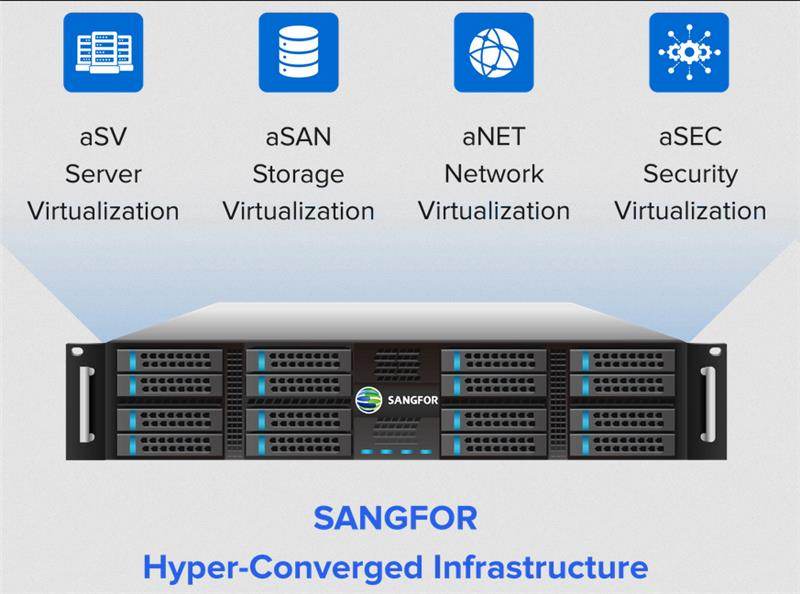
Sangfor’s hyperconverged infrastructure platform is KVM-based, which means no proprietary hypervisor lock-in. But the real story is what’s built around it. Compute, storage, networking, and enterprise-grade cybersecurity unified in a single stack.
No third-party DR tool. It’s all there, and it’s priced with a perpetual licensing option that VMware no longer offers at all.
For GCC enterprises specifically, the regional footprint matters. Sangfor has on-ground teams in the UAE and Saudi Arabia, Arabic-language support, and documented deployments across the MENA region.
The TCO reduction consistently lands at 70% or higher versus an equivalent VMware stack when you factor in bundled security and the absence of add-on licensing. Gartner has recognized Sangfor in the HCI space, providing procurement teams with the third-party validation they need to move forward. As a VMware replacement, it’s the most complete option in the MENA market right now.
Other VMware Competitors Worth Evaluating
Sangfor isn’t the only name getting serious consideration, and a fair assessment requires looking at the full field.
Nutanix AHV
Nutanix AHV is known as a mature platform, with strong hybrid cloud credentials and a solid EMEA enterprise footprint. The challenge in the GCC context to adopt Nutanix is its cost.
Nutanix’s subscription model mirrors VMware’s pricing tier more than it disrupts it. And GCC-specific security integrations and compliance tooling are less developed than Sangfor’s regional build.
Proxmox VE
The open-source angle of Proxmox VE attracts UAE SMBs with tight budgets and technical in-house capability. At the core tier, it’s genuinely free. But enterprise SLAs, regional support, and the compliance requirements that government and financial-sector organizations in the Gulf face can be limiting for Proxmox VE.
It doesn’t get you there without significant additional investment. It’s not a like-for-like VMware alternatives option for mid-to-large enterprises.
Microsoft Hyper-V
Hyper-V by Microsoft is a solid choice for organizations already running deep in the Microsoft ecosystem with Azure as their cloud strategy. Windows Defender integration works well for endpoint coverage.
The gap is in HCI depth. There’s no unified security-plus-compute-storage platform here, and the modern data center technologies GCC enterprises need for sovereign cloud and compliance go beyond what Hyper-V delivers natively.
Why VMware Is No Longer Cost‑Effective in 2026
VMware’s 2026 pricing surge makes it an unsustainable choice for most UAE and Saudi enterprises, with licensing rising 400-700% and forced bundles inflating TCO.
Sangfor HCI solves this with predictable costs, perpetual licensing, built‑in security, and strong regional adoption, making it the most practical VMware replacement for GCC organizations.
Is VMware Migration Actually Feasible in 2026?
Yes, with a convenient licensing structure, a flexible pricing model, and a more reliable security feature, such as aSec as an add-on, Sangfor HCI is a feasible VMware migration solution in 2026.
The transition is faster than most IT teams would expect. The hesitation usually comes from assumptions about complexity and downtime risk that don’t reflect what modern migration tooling actually delivers.
Sangfor’s migration toolchain supports agentless transitions with continuous replication and rollback options. Local integrators in the UAE and Saudi Arabia who are already Sangfor-certified remove the regional knowledge gap that makes enterprises nervous about committing.
Compliance, connectivity, and data sovereignty requirements are built into the transition planning from day one. Therefore, migration with Sangfor as a VMware competitor isn’t only feasible, it’s fast and effective from day one.
Feature Comparison: VMware vs Leading Alternatives
| Feature | VMware vSphere | Sangfor HCI | Nutanix AHV | Proxmox VE |
| Licensing | Subscription-heavy | Perpetual option, low TCO | High cost | Open-source free |
| Middle East | Strong but costly | UAE/GCC case studies, local | Mature | Growing in the UAE |
| Security | Add-ons required | Built-in NDR, micro-seg, DR | Partial | Basic |
| Migration Ease | Complex | Seamless, near-zero downtime | Moderate | Manual |
| Best For | Legacy enterprises | MENA mid-to-large | Large-scale | SMBs |
Your Next Step in the GCC Virtualization Shift
The new virtualization vendors gaining traction in this region aren’t winning because VMware stumbled. They’re winning because the alternatives have genuinely caught up, and in several areas, pulled ahead. The licensing models are better. The regional support is real. The migration risk is manageable.
Sangfor HCI leads the field for GCC enterprises seeking a unified, secure, cost-predictable platform backed by documented MENA deployments. The other options have their place, but for mid-to-large organizations navigating Vision 2030 timelines and tight infrastructure budgets, Sangfor is the clearest path forward.
A free infrastructure assessment takes less than a week and gives you a TCO comparison, a migration feasibility analysis, and a scoped roadmap. If you’ve been putting off the VMware conversation, 2026 is the year to stop.
Also Read: What Beginners Get Wrong About AI Image Workflows: A Look at Banana Pro AI


How to Keep Accurate Mileage Records With a Mileage Log App
Keeping accurate mileage records is an important part of managing business travel, vehicle expenses and tax documentation. Whether you are…

Amazon Vine Login: Official Access and Sign-In Help
For Amazon Vine login in the United States, start at the Amazon Vine portal and sign in with the Amazon…