

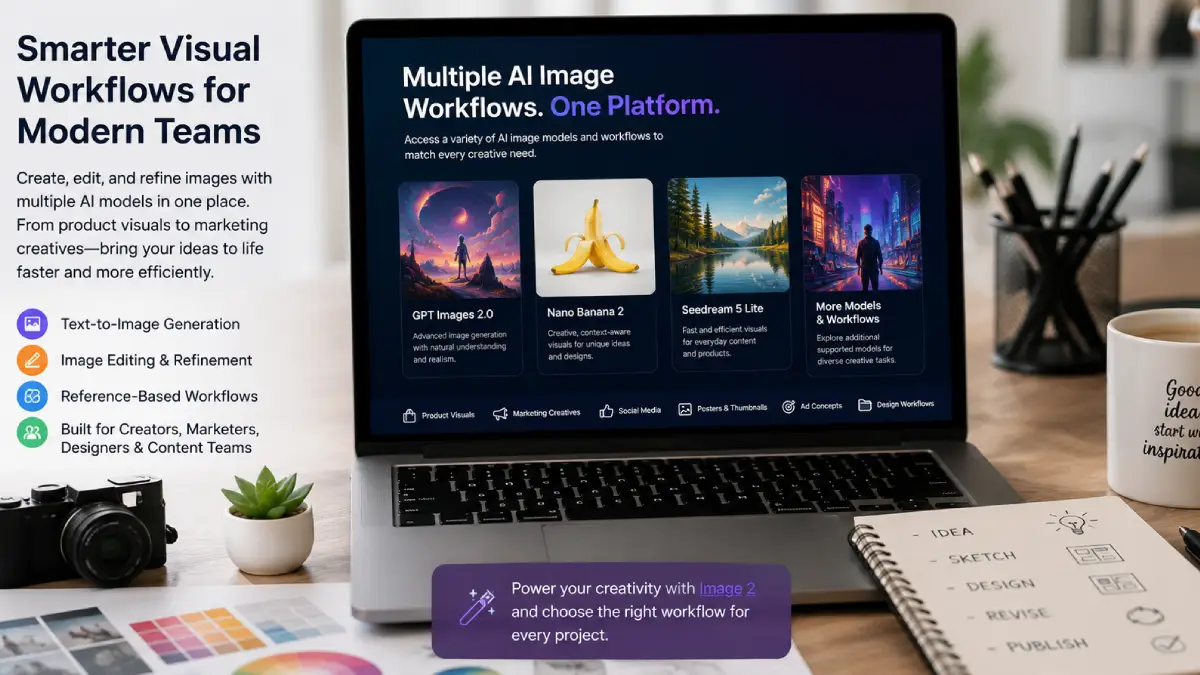
Nowadays, visual content in communication is indispensable in every sector. Whether it’s an e-commerce team building product images, social media content, digital advertising, or content publishing, teams are always searching for ways to produce quality images with an efficient workflow.
With AI image technology in constant evolution, creators aren’t limited to one method. For different projects, there are going to be different tools required, and a lot of professionals prefer to have a fluid system of working that lets them switch between different platforms back and forth while creating, editing, and refining their images.
The Shift Toward Multi-Model Workflows
Most of the previous image AI algorithms were limited to a particular model or a single task. These solutions worked great in regard to creating pictures, but more often than not, a creative team would require some other tools for tweaking images, doing comparisons or modifying the created image to suit the various channels required.
With today’s business environment, multi-model workflows are used by many professional users. They do not need to select a whole model for each scenario, but can select an appropriate workflow which meets the requirements of a project. Here, they can try various approaches and styles without difficulty, while simultaneously maintaining the structure and order of the design and content creation process.
Supporting Different Creative Needs
Modern content production involves more than simply generating images from text prompts. Teams often require several stages of work, including:
- Text-to-image creation for new concepts.
- Image-to-image editing for improving existing assets.
- Reference-based refinement for maintaining consistency.
- Product visual generation for ecommerce catalogs.
- Social media graphics for daily publishing.
- Poster and promotional design.
- Thumbnail creation for videos and online campaigns.
- Ad concept development for marketing teams.
Because every task has different requirements, having access to multiple workflows can simplify production and reduce unnecessary complexity.
AI Tools for Marketing and Content Teams
Marketing teams are often responsible for delivering on tight timeframes. However, you may not be aware of when you need to use the images on the website, social media sites, newsletters, an ad campaign, or in a meeting.
The process of creating assets from scratch can be lengthy and cumbersome, but AI can work to create a draft version and then refine it in line with a brand’s guidelines. Basically, creative practitioners can concentrate on message creation, strategy, and quality, not resources spent on content worries.
One more benefit of AI-generated visuals for content teams is that they help to produce blog posts, educational material, and promotional content. Creating consistent imagery can build a solid brand and assist audiences in comprehending information better.
Ecommerce and Product Visualization
The issue for eCommerce businesses is to clearly and attractively present products. Product photos, promotional banners, and seasonal campaign graphics get updated all the time and need to be done repeatedly.
AI-driven workflows can help address these requirements by providing tools to generate product images, experiment with creative ideas, and to produce content for different platforms. But enterprises should always check the licensing conditions and the respective usage policies of the model before using an image for business purposes.
Flexible Platforms for Image Generation and Editing
AI models are proliferating, and as a result, many customers are looking for platforms that offer multiple workflows. This prevents having to switch to different services for various purposes.
For instance, Image 2 offers multigenerational capabilities for image generation and editing processes for creators, designers, marketers, e-commerce, and content professionals. Unless the users’ specific work incorporates every facet of the modelling process, they can choose a modelling approach suitable for that particular project.
It contains access to a variety of visual workflows and supported models like GPT Images 2.0, Nano Banana 2, Seedream 5 Lite, and more image creation features. Such features enable users to select workflows aligned with their creative goals and offer flexibility during the development time.
Reference-Based Refinement and Iteration
Revisions are often a part of creative work. They may want to keep a specific style or brand consistency, or tweak the details subject to feedback from clients.
Because building on existing ideas without starting over is crucial for building off of user needs and thoughts, reference-based refinement is an important aspect of AI-assisted design. This can increase synergy among various design and marketing stakeholders that must get many iterations of suggestions prior to sign-off.
Human Creativity Still Matters
In spite of the swift advancement of AI tools, human decision-making remains crucial for effective visual communication. Yet, there’s a gap between automated systems and the designers’ strengths in comprehending the brand purpose, story, audience preferences, and campaign goals.
It’s vital to recognize that AI is a creative partner, not a creative replacement, for skilled professionals. With a suitable pairing of technology and the human mind, teams are able to create visuals rapidly, while maintaining a high standard of quality in their presentations.
Looking Ahead
New generations and stable finishes in digital content creation will probably be more and more flexible workflows, integrating the generation, editing, and refinement within a similar content delivery ecosystem. It’s not that there’s less choice of perfect solutions, but there’s an increasing number of models available, so users might look at choosing the right workflow for a job rather than the right model.
Creators, marketers, ecommerce enterprises, and content teams can leverage adaptable AI image workflows to speed up and streamline the creative process and offer tools that are flexible enough for tough-to-please customers.
Also Read: Why Your Business Isn’t Getting Customers from Instagram (And How to Fix It)

Why Manufacturers Need Industry-Specific CRM Systems
Managing customer relations in today’s manufacturing environment is about so much more than just keeping track of sales. Today’s manufacturers…

Third-Party vs Comprehensive Insurance: Finding the Right Cover for Your Scooter
Your scooter needs reliable insurance that can provide financial protection when any unexpected situation arises. Third-party and comprehensive policies provide…