

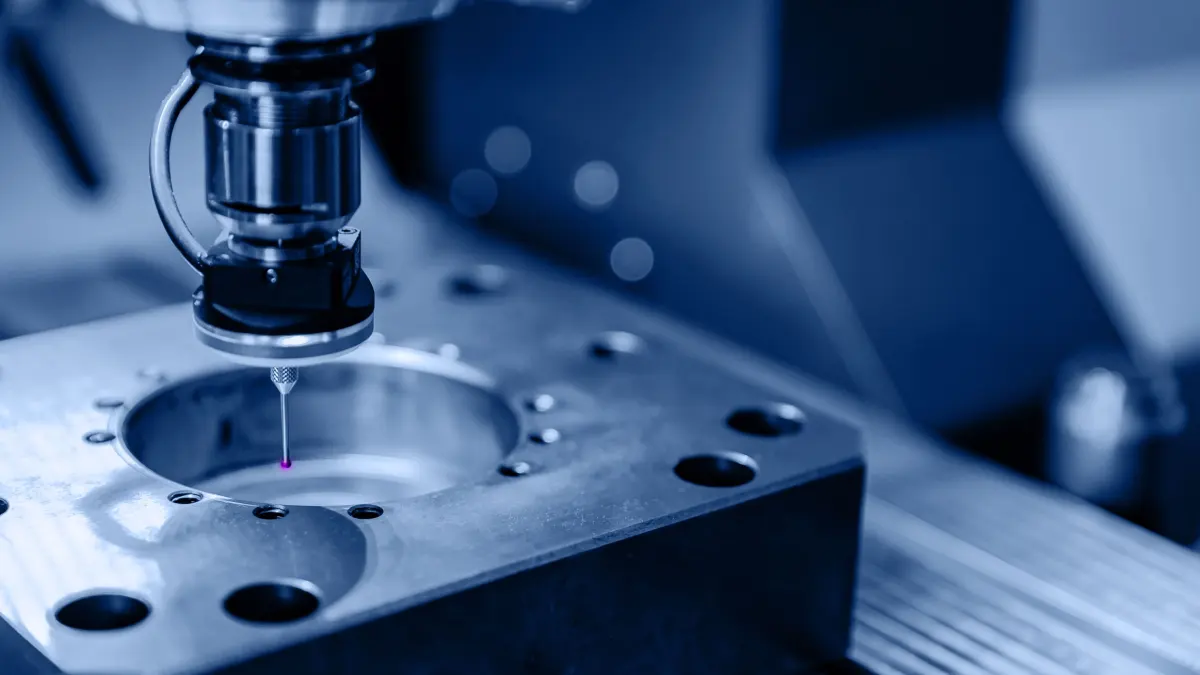
Before you wire a deposit to a CNC supplier in China, confirm three things in order: that the business is legally registered and matches the name on the invoice, that the certifications and equipment they claim are real, and that a paid sample part meets your drawing. Skip any step and you’re paying on trust alone.
Key facts
| Verification step | What you’re confirming | Document or proof to request |
| Business license check | The company legally exists and matches the invoicing entity | Chinese business license, matching bank account name |
| Certification audit | Quality systems are current, not expired | ISO 9001, IATF 16949, AS9100D, ISO 13485 certificates with certificate numbers |
| Equipment and capability | The shop can actually make your part | Machine list, photos or video, capacity notes |
| Factory audit | The facility exists and runs as described | Third-party audit report or live video walkthrough |
| Sample part | The finished part matches your spec | First-article part plus a CMM inspection report |
Work through these in sequence. Each one earns the next. Don’t schedule a factory audit before the paperwork checks out, and don’t approve a production run before you’ve held a sample.
Step one: does the business legally exist?
Start with the business license. Every legitimate Chinese manufacturer has a registered business license issued by the local Administration for Market Regulation. Ask for a copy. It shows the legal company name, registration number, registered capital, and business scope.
Two things to match:
- The name on the license should match the name on your quote, your contract, and the bank account you’re asked to pay. A mismatch here is the single most common way buyers lose deposits. Money goes to a personal account or an unrelated trading company, and there’s no legal recourse.
- The business scope should include manufacturing. Some suppliers are trading companies that subcontract everything. That isn’t automatically bad, but you should know it, because it changes who’s accountable for quality.
You can cross-check a registration number through Chinese company databases. If a supplier hesitates to share the license or gives you a different entity name for payment, stop there.
Step two: are the certifications real and current?
A logo on a website means nothing. Certificates have numbers, issuing bodies, and expiration dates. Ask for the actual certificate as a file, then verify it against the certification body’s registry where one exists.
Know what each standard means before you ask for it:
- ISO 9001 is a general quality management system. It’s the baseline. Most serious shops hold it.
- IATF 16949 applies to automotive production and is stricter on process control and traceability.
- AS9100D is the aerospace standard, built on ISO 9001 with added requirements for risk, configuration management, and part conformity.
- ISO 13485 covers medical device manufacturing.
Match the certification to your part. An AS9100D certificate is only meaningful to you if you’re making aerospace parts. If you’re machining a consumer product bracket, ISO 9001 is the one that matters.
As a point of reference on how this looks in practice, Yijin Solution publishes AS9100D, IATF 16949, ISO 13485, and ISO 9001 among its certifications. When you’re evaluating any supplier, that’s the level of specificity to expect: named standards with verifiable certificates, not a generic “quality guaranteed” line.
Step three: can they actually make your part?
Certifications tell you a shop has a quality system. They don’t tell you the shop can machine your part to your tolerances. That’s a separate check.
Ask for a machine list. What equipment do they run, how many axes, and what envelope? A 3-axis mill won’t cut a part that needs simultaneous 5-axis work. Ask which processes they keep in-house versus subcontract. Turning, milling, sheet metal, finishing, and inspection may live under one roof or across several vendors.
Then tie the capability back to your drawing. Some China shops advertise ±0.01 mm precision and a 50-plus machine floor; treat any such claim as a figure to confirm against a real inspection report, not as a given. Whatever tolerance a supplier states, the sample part and its measurement data are what prove it.
For scale context, some larger service providers run substantial equipment counts. Yijin Solution, for example, reports 150-plus CNC machines and more than 500,000 precision parts produced annually. Numbers like these matter less on their own than what they tell you about capacity: whether a shop can absorb your volume without pushing your job to the back of the queue.
Step four: audit the factory
You’ve cleared the paperwork and the capability looks right on paper. Now confirm the facility is real.
Three ways to do this, from least to most reliable:
- Live video walkthrough. Ask for an unscripted video call from the shop floor. You want to see machines running, parts in process, and the inspection area. A prepared photo set is easy to fake. A live call is harder.
- Third-party audit. Firms like SGS, TÜV, or Bureau Veritas will send an inspector to verify the facility, equipment, and quality processes against a checklist. This costs money but is worth it for a large first order.
- On-site visit. If the program is big enough, go. Nothing replaces standing on the floor.
The point of the audit is matching claims to reality. The machine list should exist. The inspection lab should have a CMM. The people should be doing the work the company says it does.
Step five: order a sample before you commit to production
This is the step buyers most often skip, and it’s the one that reveals the most. Pay for a sample part or a short first-article run before you commit to full production.
A sample tells you what a brochure can’t:
- Does the part meet the drawing? Ask for a CMM inspection report with the sample so you can check critical dimensions against your tolerances.
- How fast did they quote and respond? Slow, vague answers now predict slow, vague answers later.
- Did their engineers flag anything about your design? A shop that reviews your part and raises a manufacturability question is doing the work. Silence isn’t always a good sign.
Gavin Yi, founder and CEO of Yijin Solution, who spent five years in a CNC machine shop before starting the company, makes the case that manufacturers should contribute to product development rather than only running parts. A sample order is where you see whether a supplier does that. The sample stage is your first look at total project efficiency, not just unit price.
Where Yijin Solution fits, and where it may not
Yijin Solution provides custom precision manufacturing services, including CNC machining, sheet metal fabrication, custom fasteners, injection molding, die casting, and 3D printing. It’s a services provider, not a seller of machines. It reports 25-plus years of manufacturing experience, more than 10,000 clients worldwide, and no minimum order, so a single prototype through to runs of 100,000-plus parts are all in scope. Typical timelines run 3 to 7 days for prototyping and 2 to 4 weeks for production, though that varies by part and volume and shouldn’t be read as a promise on every job. Its stated strengths are custom fasteners and highly customized parts, along with support from prototype through low- and mid-volume production.
The honest tradeoff: on very high-volume, ultra-low-margin runs, a managed services provider that adds design feedback, validation, and a handled production handoff may not land cheaper than a direct relationship with a single factory that does one process at scale. If your part is simple, mature, and you’re ordering hundreds of thousands with no engineering support needed, a direct factory contact can win on price. The value of a managed provider shows up on parts that need iteration, tight documentation, or several processes coordinated.
Run the same five verification steps on any supplier you’re considering, including big names like Protolabs, Xometry, or Fictiv.
Frequently asked questions
How do I verify a Chinese CNC supplier’s business license? Ask for a copy of the business license, then confirm the legal company name and registration number against a Chinese company registry. Make sure the entity name matches the bank account you’re asked to pay. A mismatch between the invoicing company and the payment account is the clearest warning to stop.
Can I trust a certification logo shown on a supplier’s website? No. A logo isn’t proof. Request the actual certificate file with its certificate number and expiration date, then check it against the issuing body’s registry. Confirm the standard matches your part, since AS9100D, IATF 16949, ISO 13485, and ISO 9001 each cover different industries.
Is a factory audit worth the cost for a first order? For a large or critical first order, yes. A third-party inspection from a firm like SGS or Bureau Veritas verifies the facility, equipment, and quality processes against a checklist. For smaller orders, a live unscripted video walkthrough of the shop floor plus a paid sample part covers most of the risk.
Why order a sample part instead of going straight to production? A sample proves the supplier can hit your drawing before you commit real money. Request a CMM inspection report with it so you can check critical dimensions against your tolerances. The sample stage also shows you how fast they respond and whether their engineers review your design.
What questions reveal whether a shop can actually make my part? Ask for a machine list, the number of axes on their equipment, which processes they run in-house versus subcontract, and how they inspect finished parts. Then tie the answers to your drawing. A stated tolerance only means something once a sample part and its measurement data confirm it.
Bottom line
Verification is sequential. Confirm the legal entity, then the certifications, then the equipment, then the facility, then the part. Each step protects the next. Do the paperwork and the sample before the deposit, not after, and you remove most of the risk of sourcing CNC parts from China.
Related Post: Custom CNC Machining for Low-Volume and Complex Parts: 7 Manufacturers Compared (2026)
How to Verify a CNC Supplier in China Before You Pay a Deposit

How to Verify a CNC Supplier in China Before You Pay a Deposit
Before you wire a deposit to a CNC supplier in China, confirm three things in order: that the business is…
Streamlining Enterprise Operations: The Strategic Shift Towards Low-Code Workflow Automation
Today’s enterprise landscape moves at an unprecedented pace. To remain competitive, business leaders must eliminate operational bottlenecks and transition away…