

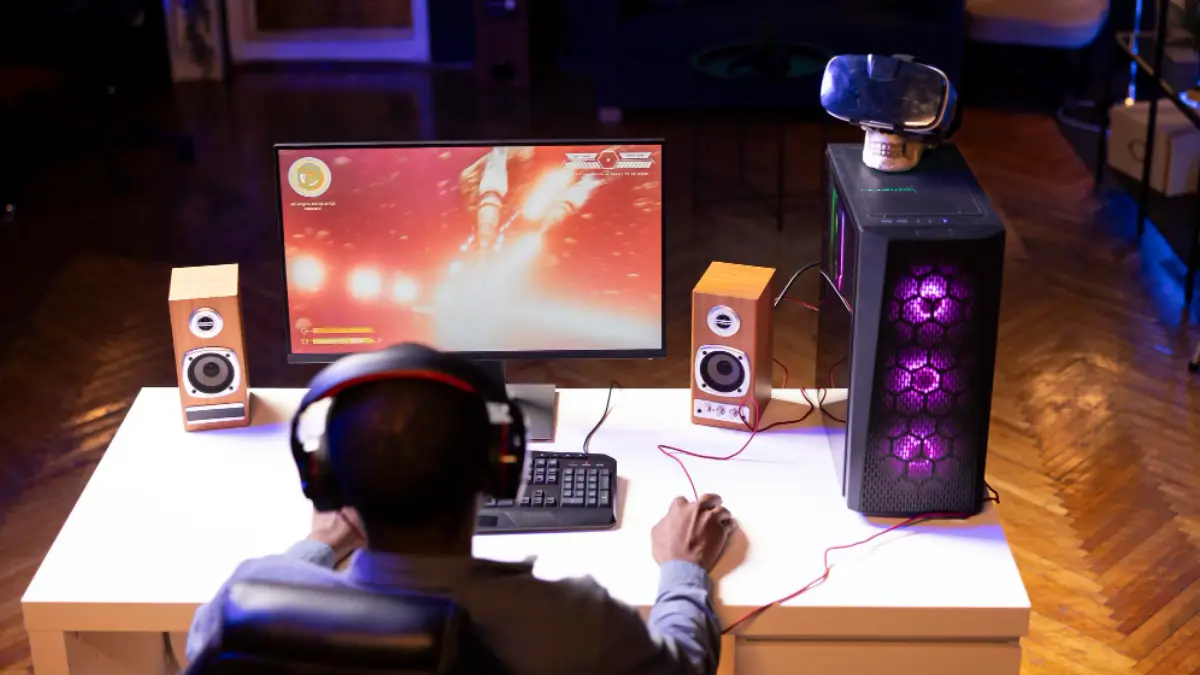
The Australian esports landscape is evolving at a breakneck pace. The global esports market is forecast to reach a staggering $27.5 billion by 2035, and Australia is taking a sizable piece of that pie. Following the massive success of the 2026 Academic Esports World Tournament held at UNSW Sydney, alongside the expanding regional competition of the GC International E-Series on the Gold Coast, competitive gaming has firmly shifted from a casual hobby to a highly structured professional pursuit. With the localised market hitting an estimated $145.8 million USD recently, players are realising that raw talent is only part of the equation. Beyond just network stability, emulating a professional environment at home is now a strict prerequisite for climbing the ranks, leading to a massive surge in players upgrading their home setups to meet modern tournament standards.
The Core Engine for Maximum Frame Rates
When building a competitive station, the foundation is always the desktop tower. Fast-paced titles like Counter-Strike 2 and Valorant demand sustained frame rates of 144 to 240 frames per second to ensure smooth, responsive gameplay. Dropped frames during a crucial firefight can mean the difference between a win and a loss. Esports titles continuously receive updates that can subtly increase their graphical demands over time, meaning older rigs might suddenly struggle to maintain peak performance. This is why investing in a highly durable, pre-built gaming pc is the most critical step for ambitious players. A system engineered for sustained high performance prevents thermal bottlenecks, ensuring that your hardware does not hold back your reaction time when the tournament pressure is on.
The push for maximum frame rates is not just a preference for visual smoothness, but a proven tactical advantage. To minimise system latency to the competitive target of under 15 milliseconds, many esports athletes purposely play at 1080p resolutions to prioritise speed over 4K visual fidelity. This approach is backed by hard science. According to NVIDIA Research, experiments measuring the effects of hardware on targeting and tracking show that competitive performance improves monotonically with higher refresh rates. Essentially, a system that outputs ultra-high frames directly reduces the delay between your physical mouse click and the action registering on screen, giving you a measurable edge in fast-twitch reaction scenarios.
Visual Clarity and Eliminating Input Lag
Generating high frame rates in your tower is only half the battle. You need a display capable of translating that raw computing power into fluid, readable motion. Pro-level gaming equipment has standardised around ultra-low latency, with modern top-tier monitors consistently featuring 240Hz to 360Hz refresh rates and response times of one millisecond or lower. If you are still using a standard office display, you are actively handicapping your mechanical potential. As outlined in a comprehensive guide on why you absolutely need gaming monitors, dedicated screens come equipped with built-in anti-tearing technologies and significantly reduced input lag, completely eliminating screen artifacting and motion blur during rapid camera movements. Many competitors also choose panels with Fast IPS technology to further drive down pixel response times, ensuring every frame is delivered with pristine clarity.
Precision Peripherals and Physical Ergonomics
With the computing and visual elements locked in, the final layer of a premium esports setup involves the physical interfaces and ergonomics. Extensive research indicates that competitive gaming takes a measurable physical toll. Up to 42 percent of frequent players report lower back or neck pain, and over 35 percent experience wrist or hand discomfort. Medical experts note that minor musculoskeletal discomfort directly impedes an athlete’s tactical decision making during prolonged tournament brackets. To build a setup that supports both elite performance and physical longevity, players must focus on these essential areas:
- Ultra-lightweight mice: Recent hardware tracking shows that approximately 50 percent of professional esports players utilise just two dominant ultra-lightweight mouse designs, both weighing under 70 grams. This drastically reduces wrist fatigue and maximises flick accuracy over long sessions.
- Wide desk surfaces: Competitive gamers often play at very low DPI settings to increase aiming precision. A wide, sturdy desk provides the necessary real estate for broad, sweeping arm movements without knocking into keyboards or other desktop accessories.
- Adjustable seating: Clinical studies highlight that ergonomic chairs with proper lumbar support are critical for reducing tissue irritation. Maintaining a healthy posture helps players keep their composure and avoid making tactical mistakes late in a match.
Creating a tournament-ready environment at home requires a deliberate approach to your hardware and health. By eliminating technical bottlenecks and prioritising physical ergonomics, Australian gamers can focus entirely on refining their skills, knowing their setup is built to support a long, successful competitive journey. Investing in premium gear today is an investment in your future ranking, ensuring that when the final round begins, nothing stands between you and victory.
Also Read: How Proactive IT Management Protects Your Business from Costly Downtime


Fewer Tabs, Fresher Adverts: What Job Posting APIs Mean for UK Recruitment Teams
Ask any in-house recruiter or agency consultant in the UK where their week goes, and a surprising share of the…

How AI Image Generation Is Changing the Way We Create Visual Content
Creating high-quality images used to require a combination of design skills, expensive software, photography equipment, and plenty of time. Today,…